
From Cost Efficiency to Enterprise Innovation
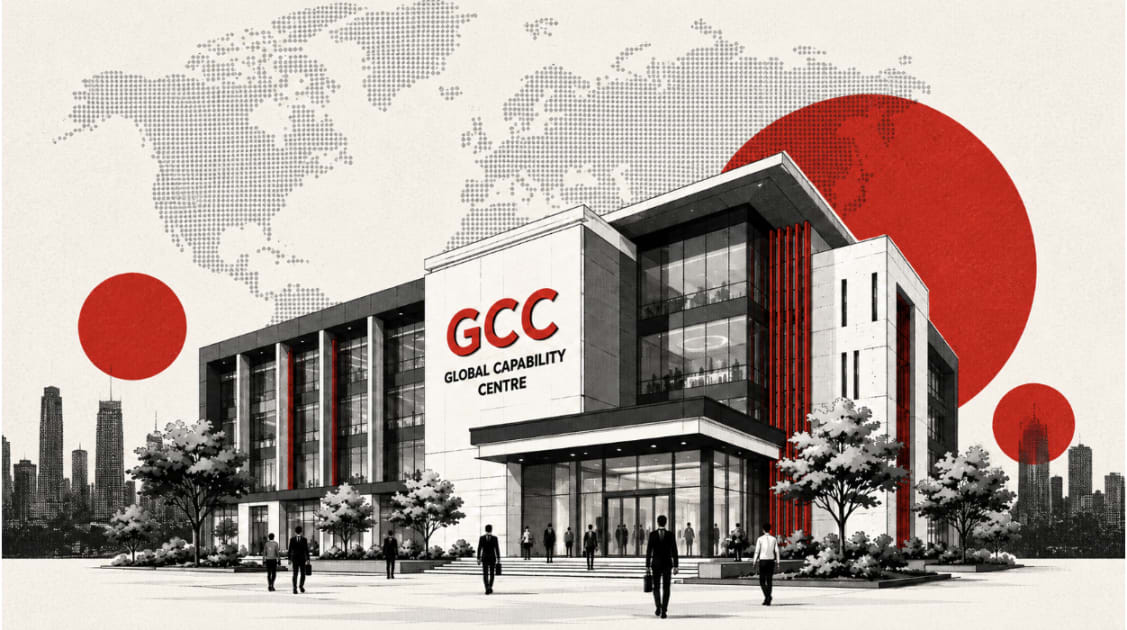
Over the last two decades, Global Capability Centers (GCCs) have transformed from operational support hubs into strategic business enablers. What began as an approach to reduce operational costs has evolved into a model that drives innovation, accelerates digital transformation, and strengthens global business capabilities.
Today, leading enterprises no longer view GCCs as back-office operations. Instead, they have become centers of excellence that lead product engineering, artificial intelligence, cybersecurity, cloud transformation, analytics, and enterprise technology initiatives. As organizations continue to modernize their global operations, GCCs are playing an increasingly important role in shaping business strategy and delivering measurable value.
This evolution is redefining how enterprises build global teams, leverage technology, and scale innovation.
The Evolution of Global Capability Centers
The earliest GCCs were established with a clear objective: optimize costs by centralizing business operations in talent-rich locations.
Functions such as finance, human resources, IT support, and customer service were moved to offshore centers to improve efficiency while reducing operational expenses. Success was primarily measured by cost savings, process standardization, and service delivery.
However, business priorities have changed dramatically.
The rapid adoption of cloud computing, artificial intelligence, data analytics, and digital platforms has shifted enterprise expectations. Organizations now require centers that not only execute processes efficiently but also contribute to innovation, accelerate technology adoption, and support long-term business growth.
Modern GCCs have evolved into strategic hubs where engineering, research, data science, AI development, cybersecurity, and digital transformation initiatives are conceived, developed, and scaled.
Rather than supporting the enterprise, today's GCCs actively shape its future.
From Cost Centers to Innovation Centers
The role of GCCs has expanded far beyond operational excellence.
Organizations are increasingly assigning ownership of critical business functions to their GCCs, including product development, enterprise architecture, AI engineering, platform modernization, customer experience transformation, and innovation programs.
Several factors have accelerated this transition.
First, enterprises require access to highly skilled global talent capable of building advanced digital solutions.
Second, businesses are under constant pressure to innovate faster while maintaining operational resilience.
Third, emerging technologies such as Agentic AI, cloud-native platforms, intelligent automation, and advanced analytics require specialized expertise that modern GCCs are well positioned to provide.
As a result, enterprise leadership now expects GCCs to generate measurable business outcomes, contribute to revenue growth, improve operational efficiency, and accelerate digital transformation across global operations.
Innovation has become the new measure of GCC success.
AI, Data, and Engineering Inside Modern GCCs
Artificial Intelligence has become one of the defining characteristics of next-generation GCCs.
Rather than treating AI as a standalone technology initiative, modern GCCs are embedding intelligence across business functions to improve decision-making, automate operations, and enhance customer experiences.
Data engineering serves as the foundation of this transformation.
Organizations generate enormous volumes of enterprise data across ERP systems, CRM platforms, supply chains, customer interactions, financial operations, and connected devices. Modern GCCs build scalable data platforms that transform this information into actionable business intelligence.
AI engineers leverage these data foundations to develop intelligent applications, predictive models, virtual assistants, autonomous workflows, and enterprise AI agents capable of improving operational performance.
Cloud engineering further enables organizations to scale these capabilities globally while maintaining security, governance, and compliance.
The convergence of AI, cloud, data engineering, cybersecurity, and software development has positioned GCCs as enterprise innovation engines rather than operational support centers.
Challenges Enterprises Face
Despite the growing importance of GCCs, building a high-performing capability center is far from straightforward.
Many organizations encounter challenges that limit their ability to generate long-term value.
One of the most significant challenges is attracting and retaining highly specialized digital talent. Competition for AI engineers, cloud architects, cybersecurity professionals, data scientists, and product developers continues to increase worldwide.
Technology integration presents another obstacle. Many enterprises operate across fragmented legacy systems, making it difficult to connect data, automate workflows, and deploy enterprise-wide AI solutions.
Organizations also face increasing governance requirements related to cybersecurity, responsible AI, regulatory compliance, and data privacy. As GCCs become more deeply integrated into enterprise operations, maintaining secure and compliant technology environments becomes essential.
Finally, many organizations struggle to align GCC objectives with overall business strategy. Without a clear operating model, innovation initiatives often remain isolated rather than delivering enterprise-wide transformation.
Addressing these challenges requires a structured approach that combines technology, talent, governance, and strategic execution.
Building Future-Ready GCCs
The future of GCCs will be defined by intelligence, agility, and business ownership.
Future-ready capability centers are investing in technologies that enable autonomous operations, intelligent decision-making, and enterprise-wide collaboration.
Several capabilities are becoming essential:
Agentic AI enables autonomous workflows that reduce manual intervention while improving operational efficiency.
Cloud-native architecture provides the scalability required for global digital operations.
Advanced analytics empowers leaders with real-time business intelligence and predictive insights.
Enterprise automation accelerates operations while improving consistency and governance.
Digital product engineering enables GCCs to build customer-centric platforms that directly support business growth.
Perhaps most importantly, successful GCCs foster a culture of continuous learning, innovation, and collaboration that enables organizations to adapt quickly to evolving business needs.
The focus is no longer on executing processes more efficiently but on creating sustainable competitive advantage through technology and innovation.
How SNS Square Accelerates GCC Transformation
At SNS Square, we help enterprises design, build, and transform Global Capability Centers that deliver measurable business value.
Our approach combines Design Thinking, enterprise engineering, and AI-first innovation to create intelligent GCC ecosystems aligned with organizational objectives.
Our capabilities include:
GCC strategy and transformation consulting
Agentic AI solution development
Enterprise AI and intelligent automation
Cloud and data platform engineering
Digital product development
Enterprise application modernization
Data engineering and advanced analytics
Cybersecurity and governance
Intelligent workflow automation
Rather than delivering isolated technology implementations, SNS Square builds integrated digital ecosystems that enable GCCs to innovate faster, improve operational efficiency, and support enterprise-wide transformation.
Our AI-first approach empowers organizations to move beyond traditional service delivery and build capability centers that continuously create business value.
The Future Belongs to Intelligent GCCs
Global Capability Centers have entered a new era.
They are no longer measured solely by operational efficiency or cost optimization. Their success is increasingly defined by their ability to innovate, build digital capabilities, accelerate AI adoption, and contribute directly to enterprise growth.
Organizations that invest in intelligent, technology-driven GCCs will be better equipped to respond to changing markets, develop new business capabilities, and create lasting competitive advantage.
At SNS Square, we partner with enterprises to build future-ready GCCs powered by Agentic AI, cloud engineering, intelligent automation, and data-driven innovation. By combining technology with strategic execution, we help organizations transform their GCCs into engines of growth, resilience, and enterprise excellence.
Comments0
Please login to join the conversation
Be the first to comment!