
Introduction
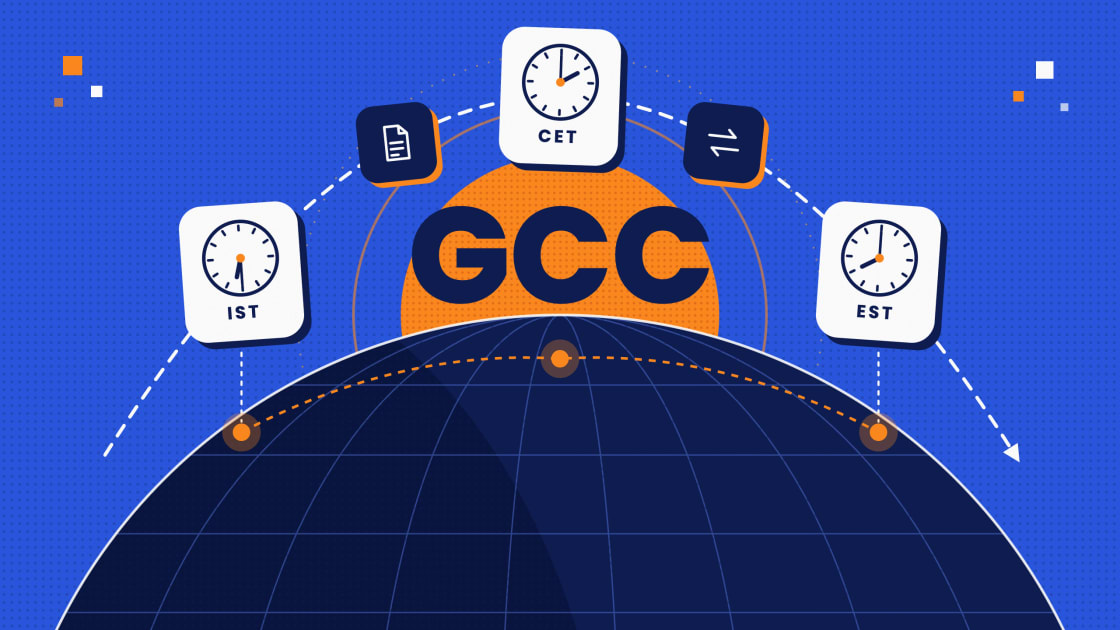
Global Capability Centers (GCCs) increasingly operate across countries, time zones, and business functions. A technology team in India may finish its workday just as colleagues in the United States begin theirs. A European team may hand over an ongoing project to an engineering team in Asia, allowing development, testing, and operational support to continue across regions.
This model, commonly known as the follow-the-sun approach, enables organizations to distribute work across global teams and maintain operational continuity beyond a single location's working hours.
But continuous work does not automatically mean continuous understanding.
When one team hands a task to another, critical context can be lost. Decisions may remain buried in meeting notes, dependencies may be unclear, and the next team may spend hours reconstructing what has already happened. Instead of accelerating delivery, global collaboration can become a cycle of repeated explanations and delayed decisions.
AI offers a way to address this challenge. By capturing work context, summarizing decisions, tracking dependencies, and coordinating handovers, organizations can help distributed teams continue from where their colleagues stopped.
The opportunity is to build a follow-the-sun GCC where work moves across time zones without losing the knowledge needed to move it forward.
1. Beyond Working Around the Clock
The traditional follow-the-sun model distributes responsibilities across geographically separated teams so that work can progress as different regions enter their working hours.
For example, a team in India may complete an initial software development task and document the remaining work for a team in Europe. The European team may continue testing, identify issues, and pass the findings to a US-based product or engineering team.
In principle, each handover reduces waiting time. In practice, the model depends on the quality of information exchanged between teams.
A task may be marked as complete without documenting an important assumption. A defect report may describe what happened without explaining what has already been investigated. A project decision may be discussed in a meeting but never reflected in the task management system.
The next team inherits the task but not necessarily the reasoning behind it.
This creates a distinction between operational continuity and contextual continuity. The first ensures that work can continue. The second ensures that the receiving team understands why the work is at its current stage, what has already been decided, and what must happen next.
For modern GCCs, both are essential.
2. Why Global Handoffs Lose Context
Context loss rarely results from a single communication failure. It often emerges from the way information is distributed across enterprise tools and team practices.
Fragmented knowledge: Project updates may exist across chat applications, emails, tickets, code repositories, documents, and meeting transcripts.
Unrecorded decisions: Teams may agree on an approach verbally without documenting the rationale, alternatives considered, or conditions attached to the decision.
Unclear dependencies: A receiving team may not know which tasks are blocked, which assumptions remain unverified, or which stakeholders must approve the next step.
Different working practices: Teams in different locations may use different documentation standards, escalation procedures, or definitions of completion.
Repeated investigation: Employees may spend valuable time searching for information or asking colleagues to explain work that has already been completed.
These challenges become more significant as GCCs manage increasingly complex activities, including software engineering, enterprise AI development, cybersecurity, data operations, and global business support.
Adding more collaboration tools may improve communication, but it does not necessarily connect the information those tools contain.
3. AI as a Context Layer for Global Work
AI can help transform fragmented project information into a more consistent view of ongoing work.
Instead of requiring employees to manually reconstruct every update, AI systems can retrieve relevant information from authorized enterprise sources, summarize recent activity, and organize the details needed for the next stage of a workflow.
For example, before an engineering team finishes its shift, an AI-assisted handover process could compile:
Work completed during the shift.
Decisions made and the reasoning documented for them.
Outstanding tasks and unresolved questions.
Dependencies, blockers, and known risks.
Relevant links to code changes, test results, documents, and tickets.
Recommended next steps for the receiving team.
The receiving team could then review a structured handover rather than searching through multiple conversations and project records.
The value lies not in producing another summary document, but in making the information actionable. A useful handover should distinguish verified facts from assumptions, identify unresolved issues, and provide links to the original sources.
AI-generated summaries must also be checked for omissions or inaccuracies, particularly when decisions affect production systems, security, regulatory obligations, or customer commitments.
4. Agentic AI: Coordinating Work Across Time Zones
AI agents can extend this capability by helping coordinate tasks across connected enterprise applications.
Consider a software release managed by engineering teams in India, Europe, and the United States.
An agent could monitor approved project systems, identify completed development tasks, retrieve relevant test results, and prepare a handover for the next team. If testing identifies a defect, another specialized agent could summarize the failure, link it to the relevant code change, and update the task record within its permitted access.
An orchestration layer could coordinate these activities and route unresolved issues to the appropriate team.
A similar approach could support cybersecurity operations, data engineering, enterprise application maintenance, and AI development.
For instance, a data operations team could document a failed pipeline, capture the relevant logs, record the investigation already completed, and identify the next diagnostic steps. The next region could continue the investigation without repeating the initial analysis.
However, continuous activity should not mean unrestricted autonomous execution. Production changes, access modifications, financial actions, and other high-impact decisions should follow established approval processes.
The objective is to automate context gathering and routine coordination while keeping accountability clear.
5. Connecting Knowledge Across Enterprise Systems
For AI to preserve context reliably, it must access the information that defines the state of ongoing work.
That information may be spread across project management platforms, enterprise messaging tools, documentation repositories, code management systems, customer support applications, and internal knowledge bases.
An integrated architecture can connect these sources through approved APIs, enterprise search, and controlled data access.
A practical approach includes three capabilities.
Knowledge integration: Brings together relevant information from authorized systems while preserving source links and access permissions.
Workflow orchestration: Coordinates handover preparation, task updates, notifications, and escalation across teams.
Governance and access control: Ensures that employees and AI agents can retrieve only the information they are permitted to access.
This foundation allows AI to assemble context from multiple sources without requiring every team to migrate its work into a single application.
It also creates an opportunity to standardize how work is documented across locations, making handovers more consistent and reducing dependence on individual employees' memory.
6. Rethinking the Global Operating Model
The follow-the-sun model works best when responsibilities are designed around clear ownership and meaningful handovers, rather than simply distributing tasks across regions.
GCC leaders can strengthen the model by establishing common working practices across locations.
Define handover standards. Specify the information required before a task moves to another team, including current status, decisions, dependencies, and next actions.
Create a shared source of truth. Ensure that important decisions and work updates are recorded in accessible, approved systems rather than remaining exclusively in private conversations.
Use AI to prepare, not replace, handovers. Let AI gather and structure relevant information while employees verify accuracy and provide context that may not be captured in enterprise records.
Clarify ownership. Assign responsibility for each task, define escalation paths, and make it clear who must act when the receiving team encounters an unresolved issue.
Measure continuity. Track handover delays, repeated investigations, time spent reconstructing context, reopened tasks, and the frequency of missed dependencies.
These practices help organizations distinguish between genuine productivity improvements and the appearance of continuous activity.
7. Measuring the Value of Context-Aware GCCs
The success of a follow-the-sun operating model should be measured by how effectively work progresses across regions, not simply by how many hours teams remain active.
Relevant measures include:
Time between one team's handover and the next team's first productive action.
Percentage of handovers containing all required information.
Time spent locating previous decisions and project records.
Number of tasks delayed by missing context or unclear ownership.
Repeated investigations and avoidable rework.
Overall delivery time and adherence to service-level commitments.
Organizations should establish baseline measurements before introducing AI-assisted handovers and compare results across controlled implementations.
The impact will depend on the quality of existing documentation, the integration of enterprise systems, the complexity of the work, and employees' willingness to adopt consistent practices.
AI can improve access to documented knowledge, but it cannot reliably recover information that was never captured or resolve organizational ambiguity on its own.
How SNS Square Fits Into the Follow-the-Sun GCC
For enterprises operating across global teams, the challenge is connecting knowledge, workflows, and technology systems so that work can continue with minimal loss of context.
SNS Square's focus on Data and Agentic AI, intelligent automation, and enterprise integration aligns with the capabilities needed to support context-aware global operations.
Through its Agentic Workbench approach, organizations can explore coordinated AI workflows that retrieve relevant information, prepare structured handovers, track outstanding tasks, and connect activities across approved enterprise systems.
This approach can help GCCs reduce repetitive coordination work while maintaining clear ownership, traceability, and governance across distributed teams.
The broader opportunity is to make global operations more than a sequence of regional handoffs. It is to establish a connected operating model in which knowledge travels with the work.
Conclusion
The follow-the-sun GCC offers organizations a way to distribute expertise and maintain operational continuity across time zones. But its effectiveness depends on more than having another team ready to begin work.
Teams need to inherit the decisions, dependencies, and evidence that explain where a task stands and what must happen next.
AI can help preserve this context by connecting enterprise knowledge, preparing structured handovers, and coordinating workflows across locations. Agentic AI can extend these capabilities by managing routine steps while respecting established permissions and approval requirements.
For GCC leaders, the next opportunity is to move beyond round-the-clock activity toward round-the-clock continuity.
When context travels with the work, global teams can spend less time reconstructing the past and more time delivering what comes next.
Comments0
Please login to join the conversation
Be the first to comment!