
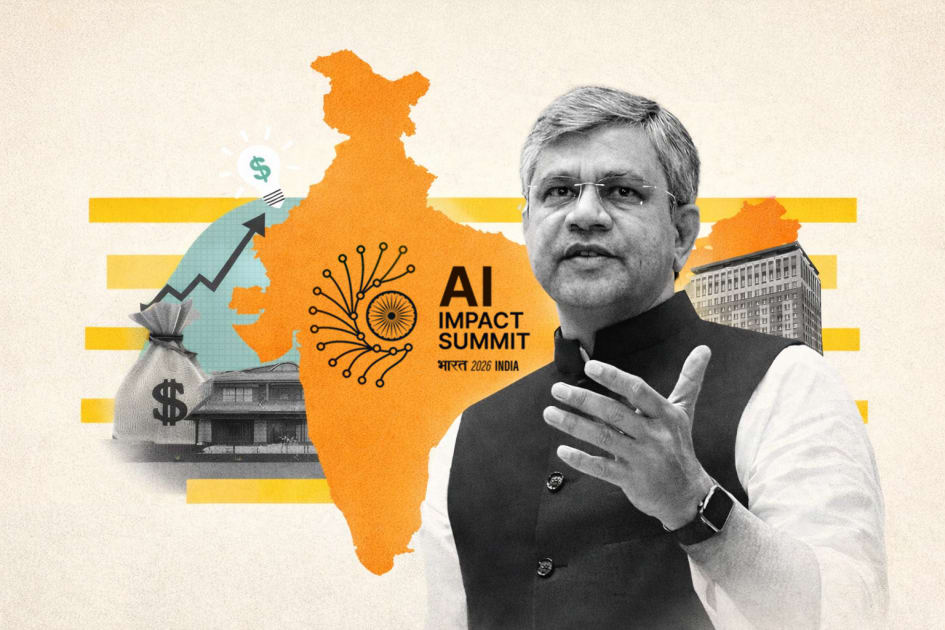
India is accelerating efforts to prepare its technology workforce for the disruptive impact of artificial intelligence. Speaking at the India AI Impact Summit 2026 in New Delhi, Union Minister Ashwini Vaishnaw emphasized that the government is actively partnering with industry and academia to upskill and reskill professionals for what he described as a “new intelligence age.”
The initiative reflects growing recognition that AI is not just another technology wave but a structural shift that will redefine jobs, productivity, and global competitiveness.
A Transition From Volume to Value
For decades, India’s IT sector has been built on scale, large teams delivering software services to global clients. AI is now changing that equation. Routine development, testing, and support functions are increasingly automated, while demand is rising for advanced skills in data science, machine learning, cybersecurity, and AI governance.
To address this shift, the government is focusing on:
Reskilling existing IT professionals for AI-driven roles
Integrating emerging technologies into university curricula
Building new talent pipelines aligned with future industries
Strengthening collaboration between academia and industry
The objective is not simply job preservation but workforce evolution toward higher-value capabilities.
Policy Push to Attract Global Data Processing
A major policy direction announced in the Union Budget aims to make India a preferred destination for global data storage, processing, and digital services delivery. By encouraging international companies to host and process data within India, the government hopes to create high-value employment and strengthen the country’s digital economy.
Such policies also support the development of large-scale data infrastructure, a critical requirement for AI systems, cloud services, and advanced analytics.
Clean Energy to Support Digital Growth
AI and data centers require significant computing power, which translates into heavy energy demand. The minister highlighted that more than half of India’s installed power capacity now comes from clean sources, reflecting a long-term commitment to sustainable growth.
Recent reforms in the nuclear energy sector and investments in grid modernization are intended to ensure reliable baseload power for future digital infrastructure. A stable energy supply is essential for sustaining the massive computational workloads associated with AI applications.

New Delhi Frontier AI Impact Commitments
One of the summit’s key outcomes was the announcement of the New Delhi Frontier AI Impact Commitments, a collaborative initiative involving global AI companies and Indian innovators.
Participating organizations agreed to focus on two major areas:
Understanding Real-World AI Impact
Companies will share anonymized and aggregated insights to help policymakers assess how AI affects jobs, skills, and economic transformation.
Multilingual and Contextual AI Development
Efforts will be directed toward ensuring AI systems work effectively across diverse languages, cultures, and real-world conditions, particularly in emerging markets.
Together, these commitments aim to promote inclusive, responsible AI that reflects global diversity rather than a single regional perspective.
Addressing Workforce Anxiety While Enabling Innovation
AI adoption has raised concerns about job displacement, particularly in service-oriented industries. Government leaders acknowledged these challenges, emphasizing that reskilling programs are designed to ensure workers transition into new roles rather than being left behind.
Industry observers note that AI is more likely to redesign jobs than eliminate them entirely, creating demand for hybrid skills that combine technical expertise with domain knowledge and human judgment.
Positioning India in the Global AI Landscape
India’s strategy combines talent development, infrastructure investment, and international collaboration. By focusing on inclusive growth and real-world deployment challenges, the country aims to shape AI adoption in a way that benefits both advanced economies and developing regions.
This approach positions India as a key player in defining how AI will influence the future of work, governance, and economic development.
The Road Ahead
The initiatives announced at the summit suggest that India is preparing not just for technological change but for a broader economic transformation. Building an AI-ready workforce, strengthening digital infrastructure, and fostering responsible innovation are central to maintaining competitiveness in an increasingly automated world.
As AI continues to reshape industries globally, the success of these efforts will determine whether India remains a leading technology powerhouse or risks falling behind more rapidly adapting economies.
What This Means for Enterprises and Innovation Ecosystems
For organizations navigating this transition, the shift toward AI-ready talent and infrastructure highlights the need for integrated strategies that combine technology adoption with workforce transformation. Institutions, enterprises, and innovation hubs will play a crucial role in translating policy vision into real-world capability.
In this context, ecosystems such as SNS Square focus on enabling next-generation enterprise readiness by supporting AI-driven skills development, industry collaboration, and innovation-led growth models. By aligning talent, technology, and strategic execution, such platforms help bridge the gap between national policy ambitions and practical implementation at the organizational level.
Comments0
Please login to join the conversation
Be the first to comment!