
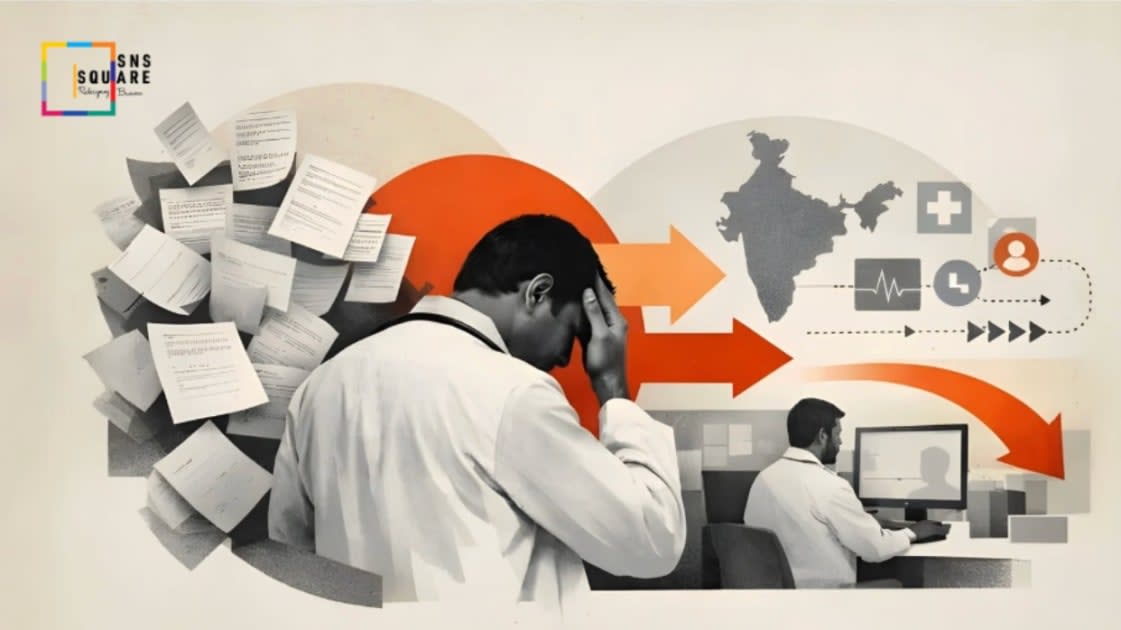
India’s healthcare system is under immense pressure. Rising patient volumes, complex regulatory requirements, and chronic staff shortages have pushed doctors to spend nearly as much time on documentation as on patient care. This administrative overload has emerged as one of the leading contributors to physician burnout across hospitals and clinics in India.
Artificial Intelligence is now beginning to change this equation.
Across India’s healthcare ecosystem, providers are adopting AI-driven documentation systems that automate clinical notes, discharge summaries, prescriptions, and compliance records. By reducing manual data entry and repetitive paperwork, AI is helping doctors reclaim time for what matters most: patient interaction and clinical decision-making.
At SNS Square Bengaluru GCC, this shift reflects a broader transformation where AI is no longer treated as a support tool, but as an operational layer embedded directly into healthcare workflows.
The Documentation Problem at the Heart of Burnout
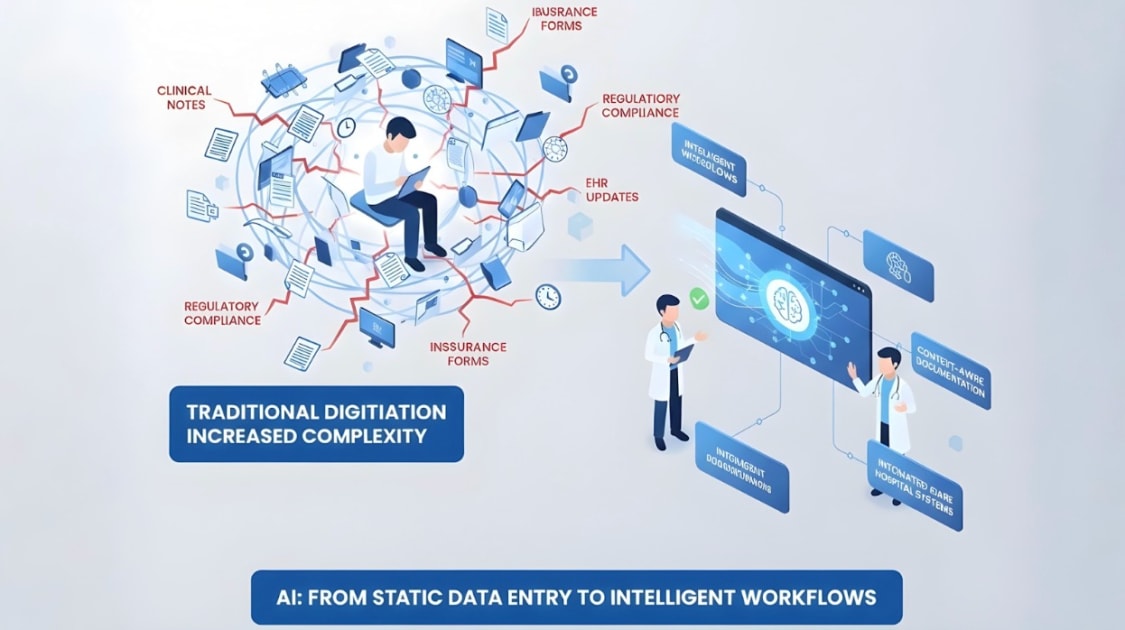
For many Indian doctors, documentation consumes hours every day. Clinical notes, insurance forms, regulatory compliance, and digital record updates often extend well beyond consultation hours. This leads to longer workdays, cognitive fatigue, and reduced job satisfaction.
Traditional digitisation through Electronic Health Records improved data availability but did little to reduce effort. In many cases, it increased complexity.
AI changes this by moving from static data entry systems to intelligent, context-aware documentation workflows.
How AI Is Changing Clinical Workflows
Modern AI systems in healthcare documentation can now:
Convert doctor–patient conversations into structured clinical notes
Auto-generate discharge summaries and prescriptions
Standardise records for compliance and insurance needsReduce duplication across systems and departments
These capabilities allow doctors to review and validate outputs rather than manually create them. The result is faster documentation, fewer errors, and significantly lower cognitive load.
This is a practical example of Data-to-Agentic AI in action, where AI systems understand clinical context and execute tasks autonomously within defined boundaries.
Why This Matters for Indian Healthcare Systems
India’s healthcare ecosystem is uniquely positioned to benefit from AI-led documentation reform. High patient density, multilingual clinical environments, and resource constraints make automation not just beneficial, but necessary.
Hospitals and healthcare institutions adopting AI documentation platforms are already reporting:
Reduced turnaround time for patient records
Improved clinician satisfaction
Better data consistency across departments
At scale, this enables healthcare systems across India to operate more efficiently without compromising the quality of care.
From Automation to Agentic AI in Healthcare
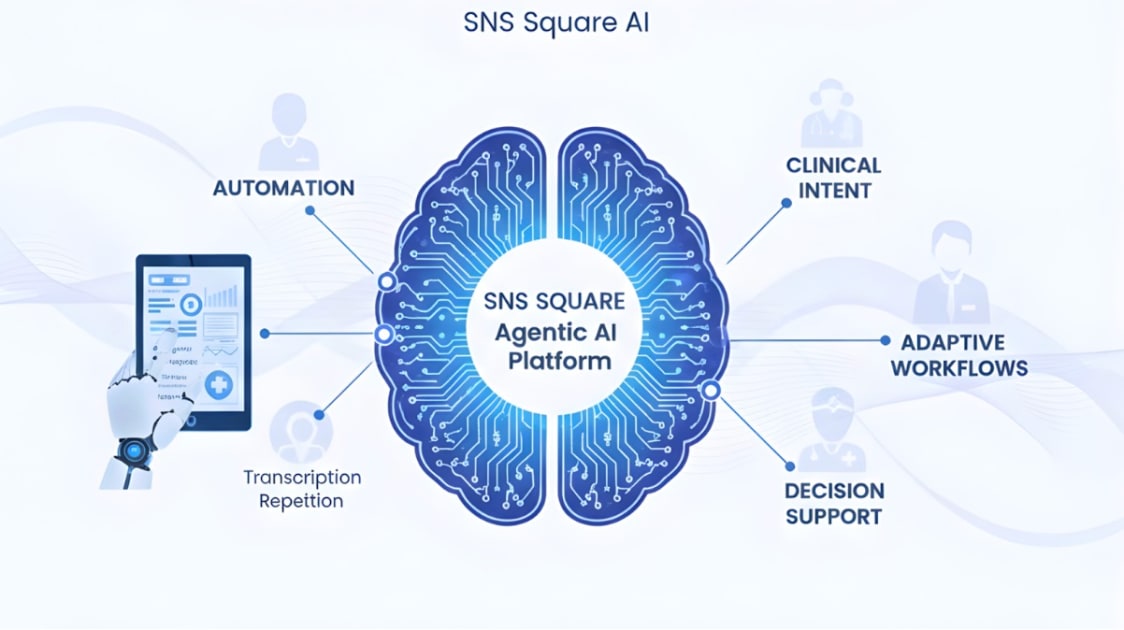
What we are seeing is not just automation, but the early stages of Agentic AI solutions in healthcare. These systems do more than transcribe. They understand clinical intent, adapt to workflows, and support decision-making.
At the SNS Square Agentic AI Platform, similar principles are applied across industries, including healthcare, where AI agents are designed to operate responsibly within complex, regulated environments.
The Role of GCCs in Scaling Healthcare AI
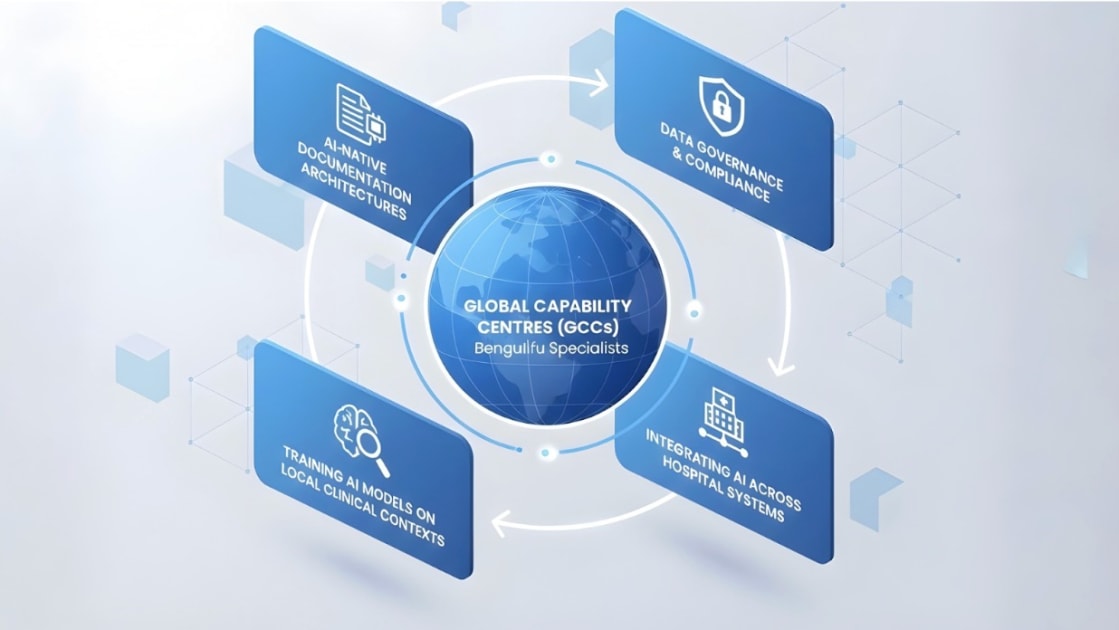
As healthcare organisations scale AI adoption, Global Capability Centres (GCCs) play a critical role in:
Designing AI-native documentation architectures
Ensuring data governance and regulatory compliance
Training AI models on local clinical and linguistic contextsIntegrating AI across hospital and enterprise systems
This is where GCC build specialists in Bengaluru become strategic partners, enabling healthcare providers to move from isolated pilots to production-grade AI systems.
A Human-Centric AI Outcome
The most important outcome of AI-driven documentation is not efficiency. It is sustainability.
By reducing burnout, AI helps retain experienced doctors, improves patient outcomes, and creates a more humane healthcare system. This reinforces a key principle of responsible AI adoption: technology should amplify human capability, not exhaust it
Looking Ahead
As India’s healthcare sector continues its digital transformation, AI-led documentation will become foundational. The next phase will involve deeper agentic capabilities, where AI systems proactively manage workflows, compliance, and insights across the care lifecycle.
The question is no longer whether AI will be used in healthcare documentation, but how thoughtfully it will be implemented.
At SNS Square, the vision is clear: enable enterprises and institutions to move from fragmented automation to Agentic AI platforms that deliver measurable outcomes sustainably and at scale.
Comments0
Please login to join the conversation
Be the first to comment!