

Generative AI is rapidly reshaping the insurance industry, moving from pilot programs to enterprise-scale adoption. According to The Business Research Company, the global generative AI market in insurance is projected to reach $1.4 billion by 2025 and grow at a compound annual growth rate of 28.5%, reaching nearly $4.8 billion by 2030.
This acceleration reflects how insurers are under pressure to modernise operations, reduce costs, and deliver faster, more personalised services in an increasingly competitive and regulated environment.
From Automation to Intelligence in Insurance Operations
Today, generative AI is being applied across core insurance workflows, particularly in areas involving high volumes of unstructured data and repetitive processing. Insurers are using Gen AI to automate claims intake and processing, detect fraudulent documentation, generate customised policy quotes, and assist underwriting teams with faster risk evaluation.
By analysing large datasets using machine learning models, insurers can identify patterns that traditional systems often miss. This improves accuracy in risk assessment while significantly reducing turnaround times for policy issuance and claims resolution. These capabilities are especially valuable for insurers serving both retail and commercial segments at scale.

Early Adopters See Measurable Business Gains
Recent industry data shows that insurers who adopted Gen AI early are already realising tangible operational and financial benefits. Many report a 20% to 40% reduction in customer onboarding costs, driven by automation of documentation, verification, and policy setup. In addition, improved customer segmentation and targeting have contributed to a 15% increase in premium growth.
Beyond cost efficiency, insurers are seeing improvements in customer experience. Faster responses, personalised interactions, and quicker claims settlements are helping reduce churn and build long-term trust with policyholders.
As adoption deepens, insurers are moving beyond isolated use cases toward more integrated AI-driven operating models. This shift aligns with the broader industry trend toward AI-native Global Capability Centres, particularly in technology hubs such as Bengaluru, where insurers are consolidating data, analytics, and AI capabilities under unified governance models.
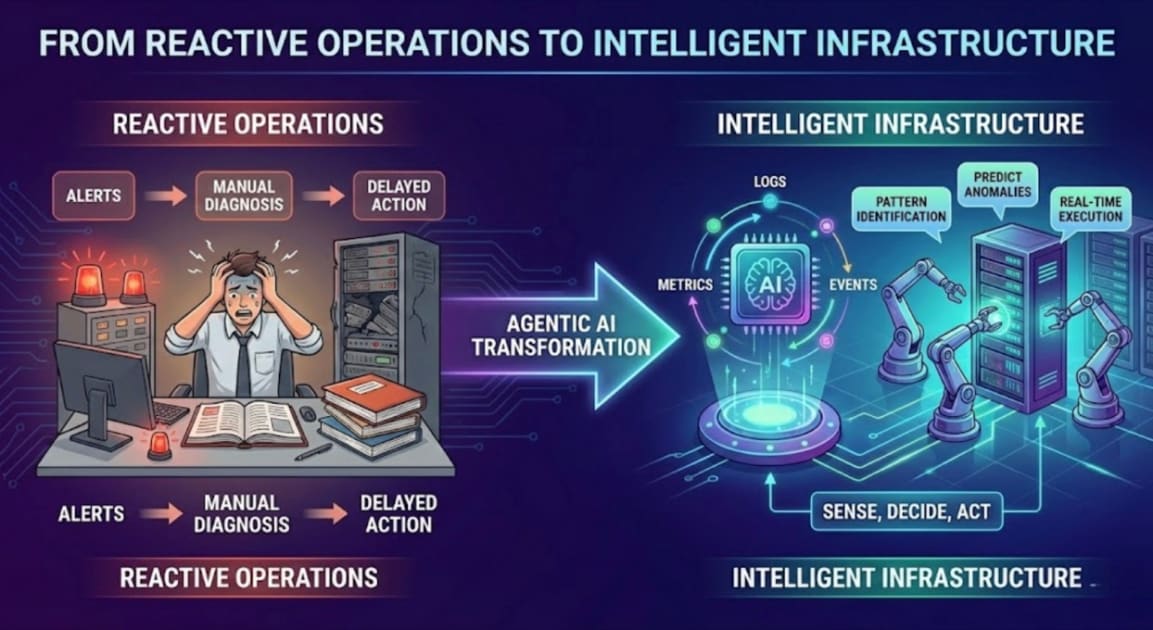
Platforms focused on agentic AI are enabling insurers to experiment with systems that not only automate tasks but also support decision-making within defined guardrails. This approach allows organizations to balance efficiency, compliance, and accountability as AI becomes more embedded in core processes.
What the Next Five Years Will Look Like
Looking ahead, generative AI is expected to become a foundational capability for insurers rather than an optional innovation layer. Regulatory clarity, improved model governance, and enterprise-grade AI infrastructure will accelerate adoption across underwriting, claims, fraud detection, and customer engagement.
For insurance leaders, the opportunity lies in using Gen AI not just to reduce operational friction, but to redesign workflows around intelligence, speed, and adaptability. Those who invest early in scalable, well-governed AI systems will be better positioned to compete in a market where responsiveness and precision increasingly define success.
Comments0
Please login to join the conversation
Be the first to comment!