
Introduction
Supply chains have never operated in isolation. They connect suppliers, manufacturers, warehouses, logistics providers, retailers, and customers across increasingly complex networks. As disruptions become more frequent and customer expectations continue to rise, simply knowing what is happening across the supply chain is no longer enough.
For years, organizations invested in supply chain visibility platforms to track shipments, monitor inventory, and understand operational performance. These systems created an important foundation by bringing fragmented data into a more connected view.
The next evolution is moving from visibility to intelligence.
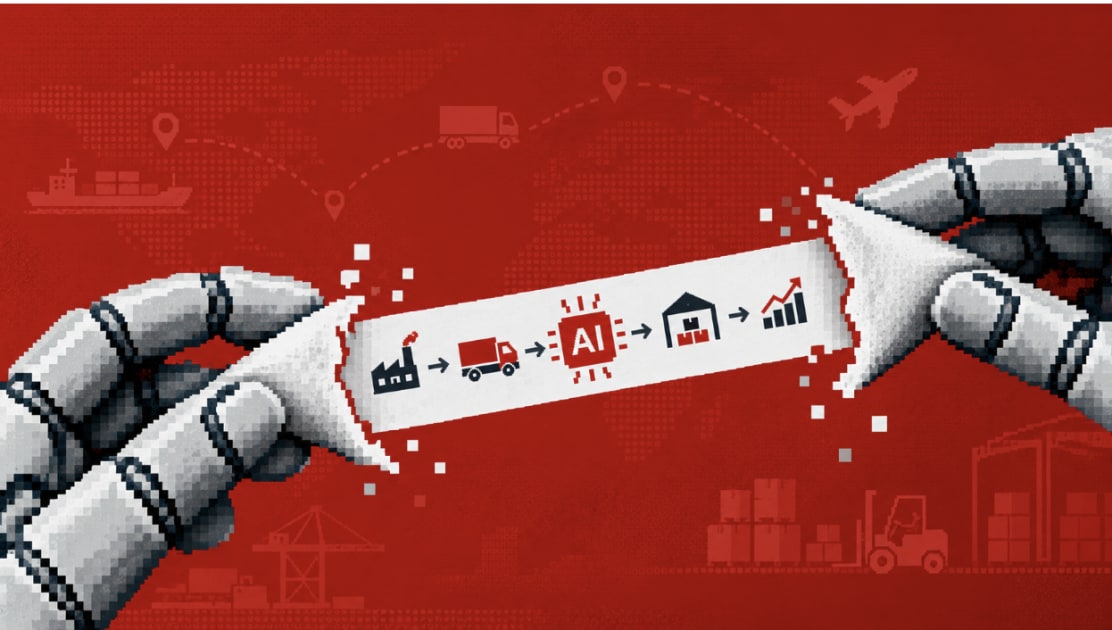
With AI, predictive analytics, automation, and increasingly autonomous AI agents, supply chains can move beyond monitoring events to understanding what they mean, anticipating what may happen next, and supporting or executing the right response.
From Visibility to Intelligence
Traditional supply chain visibility answers questions such as:
Where is my inventory?
Where is a shipment?
Which orders are delayed?
What is the current demand?
Which suppliers are experiencing issues?
These insights are valuable, but they are largely descriptive.
Intelligent supply chains go further. They ask:
What is likely to happen next? Why is it happening? What should we do about it?
AI can analyze information across historical data, real-time operational signals, market conditions, weather, supplier performance, transportation data, and customer demand.
This creates a shift from knowing what happened to anticipating and responding to what happens next.
The Data Foundation Behind Intelligent Supply Chains
Intelligence begins with connected data.
Modern supply chains generate information from ERP systems, warehouse management platforms, transportation systems, IoT devices, supplier networks, customer platforms, and external data sources.
The challenge is not simply collecting this information. It is making it accessible, reliable, and useful for decision-making.
A strong data foundation enables organizations to create a unified operational view while giving AI systems the context required to generate meaningful insights.
This can support capabilities such as:
Demand forecasting
Inventory optimization
Supplier risk analysis
Predictive maintenance
Route optimization
Delivery prediction
Capacity planning
Procurement intelligence
When these capabilities work together, supply chain technology becomes more than a reporting layer. It becomes an intelligence layer.
From Predictive to Prescriptive Operations
Predictive analytics has already changed how organizations manage supply chains.
Instead of waiting for inventory shortages or equipment failures, businesses can identify potential issues in advance.
The next step is prescriptive intelligence.
For example, an AI system may identify that demand for a product is likely to increase in a particular region. Instead of simply reporting the forecast, it can evaluate inventory levels, supplier lead times, transportation capacity, and warehouse availability to determine possible actions.
This creates a more connected decision-making process:
Detect → Predict → Recommend → Act
The result is a supply chain that can respond to changing conditions with greater speed and precision.
The Rise of AI Agents in Supply Chain Operations
The emergence of AI agents is taking supply chain intelligence a step further.
An AI agent can be designed to monitor a specific operational area, interpret information, and support actions based on defined objectives and controls.
Consider a Supply Chain Risk Agent.
It could continuously monitor supplier performance, shipment delays, geopolitical developments, weather conditions, and inventory exposure. When a potential disruption is identified, the agent can assess its impact, identify alternative suppliers or routes, and present recommendations to the relevant team.
Similarly, an Inventory Optimization Agent could monitor demand patterns and inventory levels, identify potential stockouts or excess inventory, and support replenishment decisions.
These systems shift supply chain management from periodic analysis toward continuous intelligence.
Building a More Resilient Supply Chain
Resilience has become a central priority for supply chain leaders.
Disruptions can originate from many sources, including supplier failures, transportation constraints, demand fluctuations, natural events, and changing market conditions.
AI can help organizations identify vulnerabilities before they become major operational problems.
By continuously analyzing supply chain signals, intelligent systems can identify emerging risks and help teams evaluate alternative scenarios.
Digital twins and simulation technologies can further support this process by allowing organizations to model potential disruptions before making operational decisions.
The objective is not simply to react faster.
It is to create a supply chain that can anticipate, adapt, and recover more effectively.
Human Intelligence Still Matters
The move toward intelligent supply chains does not eliminate the need for human expertise.
Supply chain decisions often involve business relationships, commercial considerations, regulatory requirements, and strategic priorities that cannot be reduced to a single algorithmic decision.
AI can provide analysis, recommendations, and automation, while people remain responsible for oversight, judgment, and high-impact decisions.
This creates a collaborative operating model where technology handles scale and complexity while supply chain professionals focus on strategy, exceptions, and business outcomes.
The Road Ahead
The future of supply chain technology will increasingly be defined by connected intelligence.
Organizations will move from dashboards to predictive systems, from predictive systems to AI-powered recommendations, and from recommendations toward controlled autonomous execution.
The most important shift is therefore not simply the adoption of another AI tool.
It is the transformation of the supply chain operating model itself.
A modern supply chain should be able to see what is happening, understand why it is happening, anticipate what could happen next, and respond intelligently.
The SNS Square Perspective
At SNS Square, we see the evolution of supply chain technology as a journey from visibility to intelligence and ultimately to intelligent action.
Our approach combines data, AI, automation, and agentic capabilities to help enterprises address complex operational challenges across forecasting, inventory, procurement, logistics, supplier management, and risk.
Through the SNS Square Agentic Workbench, organizations can build and orchestrate AI-powered solutions designed around specific business processes and industry requirements.
The goal is not to add AI for the sake of technology adoption. It is to connect intelligence to measurable business outcomes.
Conclusion
Supply chain visibility created the foundation for modern operations. AI is now creating the next layer of value.
As organizations move toward predictive, prescriptive, and agent-driven operations, supply chains can become more responsive, resilient, and intelligent.
The future is not simply about knowing where everything is.
It is about knowing what comes next, understanding what to do, and enabling the supply chain to respond intelligently.
Comments0
Please login to join the conversation
Be the first to comment!