
Introduction
Financial institutions are facing a growing challenge: identifying suspicious financial activity is no longer enough to understand how financial crime unfolds. As transactions span multiple accounts, payment networks, and financial platforms, investigators need to connect fragmented information and uncover patterns that may remain hidden within individual records.
Traditional monitoring systems can flag anomalies, but turning those alerts into meaningful investigative insights often requires extensive manual analysis. Teams must piece together transaction histories, establish relationships between entities, verify supporting information, and assess the wider implications of each finding.
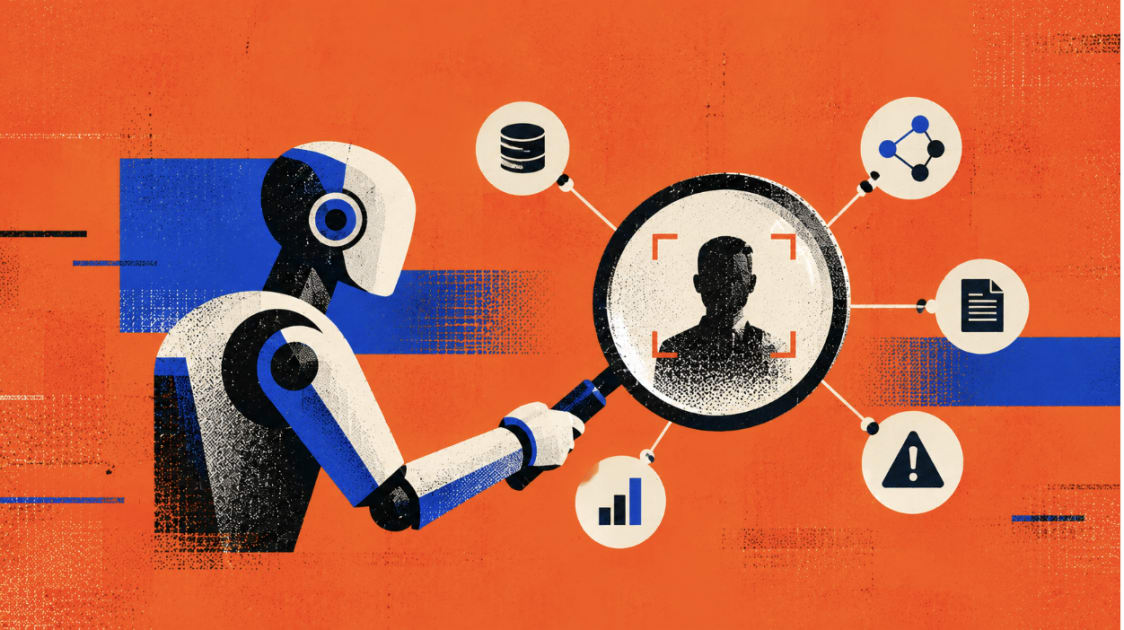
Multi-agent AI presents an opportunity to rethink this process. By bringing together specialized AI agents for transaction analysis, relationship mapping, evidence gathering, and risk assessment, financial institutions can develop a more coordinated approach to investigations.
The shift is from simply identifying potential threats to building a clearer picture of financial activity, giving investigators the context and analytical support needed to make informed decisions.
Why Financial Crime Investigations Need a Different Approach
A transaction monitoring alert provides a starting point, not a complete explanation. Investigators must determine whether the activity is unusual for the customer, whether other accounts are involved, and whether the available information reveals a broader pattern.
This work frequently spans transaction monitoring platforms, customer databases, compliance tools, and historical case records. Information may be distributed across systems that were not originally designed to support a unified investigation.
The result is a gap between identifying a potential threat and developing a sufficiently supported case.
A multi-agent approach can help bridge that gap. Instead of relying on one AI system to perform every task, financial institutions can coordinate agents with clearly defined responsibilities.
One agent might examine transaction sequences, another could map relationships between entities, and a third could retrieve relevant case documentation. Their findings can then be assembled into a consolidated view for an investigator.
This structure enables AI to support the investigative process as a whole rather than operate as an isolated detection mechanism.
1. Following the Money Across Transaction Networks
Understanding the movement of funds is central to many financial crime investigations. Suspicious activity may involve repeated transfers, unusual transaction sequences, rapid movement between accounts, or payments involving multiple counterparties.
A transaction analysis agent can examine authorized financial records to identify activity that deserves additional scrutiny.
It can help investigators:
Reconstruct the sequence and timing of relevant transactions.
Compare payment behavior with established customer patterns.
Identify unusual transfer volumes, values, or frequencies.
Highlight connections between accounts and counterparties.
Explain which transaction characteristics contributed to an alert.
Imagine a series of transfers passing through several accounts over a short period. Examining each payment independently may reveal only isolated anomalies. Reviewing the sequence as a connected chain could provide investigators with a clearer view of the movement of funds.
The purpose is to surface meaningful relationships for further examination, not to automatically label every unusual transaction as criminal activity. Legitimate payments can exhibit similar characteristics, so findings require contextual validation.
2. Mapping Relationships That Individual Alerts Cannot Reveal
Financial crime can involve networks of people, businesses, accounts, and payment intermediaries. Understanding these relationships may be just as important as examining individual transactions.
An AI agent dedicated to relationship analysis can use authorized information to connect relevant entities and identify associations that warrant investigation.
For example, multiple alerts may involve different accounts but share a beneficiary, counterparty, business relationship, or transaction pathway. Examining these connections together may reveal a common link that was not obvious when the alerts were reviewed separately.
Within a coordinated system, different agents can contribute complementary findings. One can construct a relationship map, another can compare identified entities against approved historical case information, and another can explain the connections in a format suitable for analyst review.
This approach can help investigators understand how separate events may relate to a wider pattern.
Network connections alone, however, do not establish wrongdoing. Relationships must be evaluated alongside reliable evidence, relevant context, and established investigative procedures.
3. Turning Scattered Records Into Usable Evidence
Investigation teams often spend substantial time collecting information before meaningful analysis can begin. Transaction statements, customer verification documents, account histories, previous alerts, and compliance records may all be relevant to a single case.
An evidence management agent can help retrieve permitted records, arrange them into a logical timeline, and identify information that appears incomplete or inconsistent.
Additional agents can support specific activities, such as comparing records across systems, summarizing historical events, or connecting investigative observations to their supporting documentation.
This can make it easier for analysts to understand what is already known, what remains uncertain, and which questions need to be answered next.
The distinction between information retrieval and evidence validation is essential. AI can organize and interpret available records, but investigators must be able to verify every material finding against the original source.
Maintaining source references, preserving original documents, and recording changes throughout the process are necessary for auditability and reliable decision-making.
4. Making Investigation Queues More Intelligent
Financial institutions may receive large numbers of alerts, creating a challenge in deciding which cases require immediate attention and which can be reviewed through standard procedures.
A risk assessment agent can help organize cases using institution-approved indicators, relevant customer information, transaction behavior, and the circumstances surrounding each alert.
Rather than relying on a single indicator, a coordinated workflow could combine transaction findings, relationship analysis, historical information, and evidence availability to provide investigators with a broader assessment.
For instance, several related alerts supported by consistent evidence may require a different level of scrutiny from an isolated anomaly with little additional context.
The system should also explain the factors contributing to its assessment. Analysts need to understand why a case has been highlighted, which signals influenced the recommendation, and what additional information may be required.
Risk prioritization must remain transparent, regularly validated, and subject to appropriate oversight. AI-generated assessments should support established investigative policies rather than independently determine customer restrictions or regulatory outcomes.
5. Creating Investigation Reports That Are Easier to Review
Once the relevant information has been assembled, investigators must communicate their findings clearly. Internal case reviews and regulatory reporting processes may require transaction timelines, supporting records, explanations of suspicious patterns, and documentation of the actions taken.
A reporting agent can help organize these materials into a structured case narrative. It may summarize the sequence of events, reference supporting records, identify unresolved questions, and check whether required documentation is present.
A separate review agent can examine the draft for missing fields, inconsistent dates, unsupported statements, or discrepancies between the narrative and the source material.
These capabilities can help standardize documentation and reduce the administrative effort associated with preparing cases.
Nevertheless, AI-generated reports should remain drafts until reviewed by qualified personnel. Investigators must verify the conclusions, establish whether escalation or reporting is required, and approve any formal submission. Where evidence is incomplete, the system should clearly identify the gap rather than generate an unsupported explanation.
6. What Makes a Multi-Agent Investigation System Work?
Effective implementation depends on more than deploying several AI models. Financial crime workflows require reliable information access, controlled collaboration, integration with existing systems, and a clear record of how findings were produced.
Four technology foundations are particularly important.
Unified Data Access
Agents need authorized access to relevant transaction information, customer records, previous cases, and approved risk intelligence. Data quality and consistent entity identification are important for avoiding misleading connections.
Purpose-Built AI Agents
Each agent should have a defined responsibility, such as transaction examination, relationship mapping, record retrieval, risk assessment, or report preparation. Narrow responsibilities make outputs easier to evaluate and control.
Workflow Coordination and Enterprise Integration
An orchestration layer determines which tasks should run, what information can be shared, and when findings should move to the next stage. Integration with existing monitoring, compliance, and case management platforms allows the workflow to fit into established operations.
Security and Governance
Access restrictions, audit logs, data protection, approval requirements, and output monitoring must be built into the system. Institutions also need to test for unreliable responses, missed signals, false positives, and attempts to manipulate AI-generated results.
Together, these foundations provide a controlled environment in which specialized agents can contribute to an investigation without receiving unrestricted access or authority.
How SNS Square Can Support This Transformation
For financial institutions, implementing AI in investigative operations involves connecting data, analytical capabilities, and existing business systems within a controlled enterprise environment.
SNS Square focuses on Data and Agentic AI, intelligent automation, and enterprise integration. These capabilities are relevant to designing workflows in which multiple AI agents contribute to a shared operational objective.
Through its Agentic Workbench approach, SNS Square can help organizations explore coordinated workflows for retrieving information, analyzing transaction patterns, identifying exceptions, organizing evidence, and preparing investigative documentation.
The objective is to connect individual AI capabilities into a structured process that supports financial crime teams while preserving appropriate access controls, traceability, and human decision-making.
This approach allows institutions to explore AI-enabled investigation workflows without treating autonomous decision-making as a substitute for established compliance and risk management practices.
Conclusion
Financial crime investigations require more than identifying unusual transactions. They demand the ability to connect events, examine relationships, assemble reliable evidence, and understand the broader context surrounding potential threats.
Multi-agent AI offers a way to coordinate these activities through specialized analytical capabilities and structured workflows. It can help reduce repetitive information gathering, improve access to relevant context, and support more consistent investigation documentation.
Successful adoption depends on reliable data, carefully defined agent responsibilities, transparent outputs, secure integrations, and meaningful human oversight.
For financial institutions, the opportunity is to create a more connected investigative process in which technology helps analysts move from scattered signals to evidence-supported conclusions. The ultimate objective is better-informed investigations, not simply faster alert processing.
Comments0
Please login to join the conversation
Be the first to comment!