
Introduction
Enterprise AI is entering a new phase.
Organizations are moving beyond individual chatbots and isolated automation tools toward AI agents capable of performing specific business tasks. One agent may manage customer queries, another may monitor financial transactions, while others handle IT operations, supply chain planning, employee support, compliance, or data analysis.
As adoption grows, enterprises may have hundreds, or even thousands, of specialized AI agents operating across different functions.
But this creates a new challenge:
Who coordinates all these agents?
The answer lies in AI orchestration.
The Rise of the Enterprise AI Workforce
AI agents are increasingly becoming digital workers embedded within business processes.
A customer service agent can retrieve customer information and resolve routine requests. A finance agent can validate invoices and identify anomalies. An IT agent can monitor infrastructure and respond to incidents.
Individually, these agents can create significant value.
The challenge emerges when they need to work together.
A business process rarely belongs to a single department. Consider a customer order:
Customer Service → Sales → Inventory → Finance → Logistics
If each function has its own AI agent, the enterprise needs a mechanism that allows these agents to communicate, coordinate tasks, share relevant context, and operate within defined business rules.
That mechanism is the orchestration layer.
Why Agent-to-Agent Coordination Matters
The next generation of enterprise AI will not simply involve more agents. It will involve connected agents working toward shared business outcomes.
Imagine a supply chain disruption.
A monitoring agent detects a potential delay. It alerts a supply chain agent, which evaluates inventory levels. A procurement agent identifies alternative suppliers. A finance agent assesses the cost implications. A logistics agent evaluates available transportation options.
Instead of waiting for each department to act independently, an orchestration layer can coordinate the workflow.
The agents remain specialized, but their activities become connected.
What Does an AI Orchestrator Actually Do?
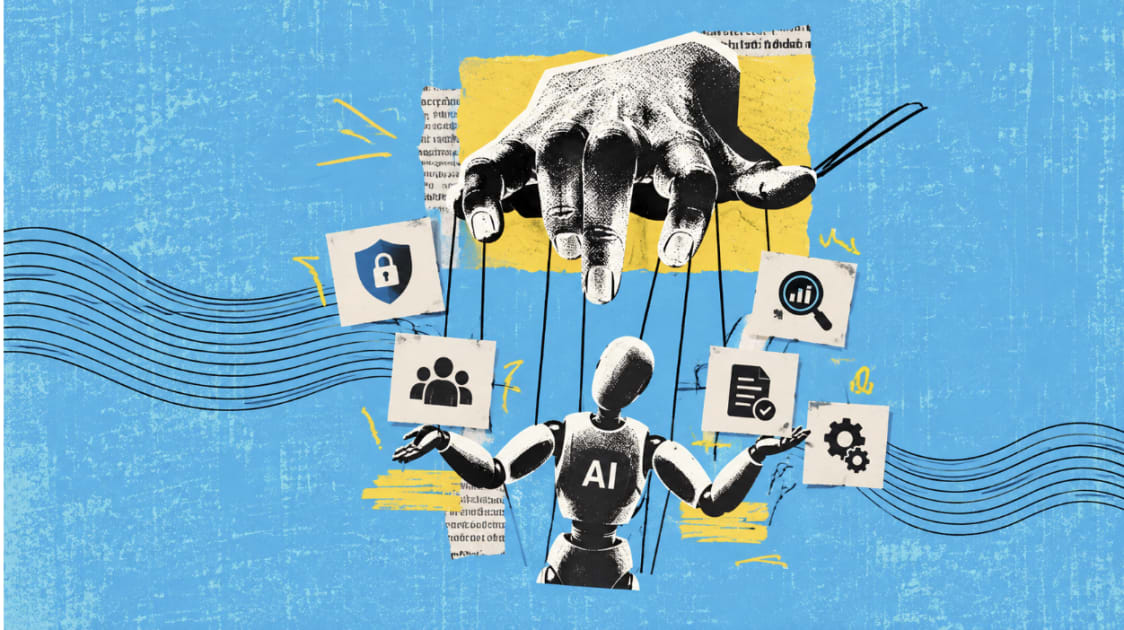
An AI orchestrator acts as the coordination layer between agents, enterprise systems, data, and people.
Its responsibilities can include:
Task Routing
The orchestrator determines which agent is best suited to handle a particular task.
Workflow Coordination
It manages the sequence of activities across multiple agents and systems.
Context Management
Agents need relevant information to make decisions. The orchestrator helps provide the appropriate context while controlling unnecessary data exposure.
Decision Management
The orchestration layer can determine when an agent can act independently and when a human approval is required.
Exception Handling
When an agent encounters an unexpected situation, the orchestrator can redirect the task, request additional information, or escalate it to a human.
Performance Monitoring
Organizations need visibility into how agents are performing, including execution time, errors, outcomes, and resource consumption.
This transforms a collection of independent AI tools into a coordinated enterprise AI environment.
From Individual Agents to Multi-Agent Systems
The distinction between an AI agent and a multi-agent system is becoming increasingly important.
An individual agent is designed to accomplish a specific objective.
A multi-agent environment brings several specialized agents together.
For example:
Research Agent
Collects relevant information.
Analysis Agent
Interprets the information.
Planning Agent
Creates an action plan.
Execution Agent
Carries out approved actions.
Monitoring Agent
Tracks the results.
Each agent has a defined responsibility, while the orchestration layer manages how they collaborate.
This approach can make enterprise AI more modular and scalable.
The Enterprise Needs a Control Plane for AI
As the number of agents grows, managing them individually becomes impractical.
Enterprises will need a centralized AI control plane that provides visibility and governance across the agent ecosystem.
Such a layer can help organizations manage:
Agent identity and access
Permissions and policies
Workflow execution
Data connections
Model selection
Agent communication
Human approvals
Security controls
Audit trails
Performance metrics
This is particularly important for organizations operating in highly regulated environments.
The objective is not to centralize every decision. It is to create a reliable framework within which autonomous systems can operate.
Orchestration Is Also About Governance
More autonomy creates more responsibility.
If hundreds of agents can access enterprise systems and perform actions, organizations must know exactly what each agent is permitted to do.
For example, an agent may be authorized to identify an invoice discrepancy but not approve a payment above a defined threshold.
Another agent may recommend a customer refund but require human approval before execution.
An orchestrator can enforce these policies consistently across workflows.
This makes orchestration an important part of enterprise AI governance, not simply a technical integration layer.
Designing for Humans and AI Agents
The future enterprise will not be completely autonomous.
Human employees will continue to provide judgment, domain expertise, strategic direction, and accountability.
The role of orchestration is therefore to determine where AI should act and where humans should remain involved.
A well-designed workflow might allow agents to handle routine decisions independently while escalating high-impact or ambiguous cases to employees.
This creates a model where people manage exceptions and strategic decisions while AI handles scale and repetitive execution.
Building an Orchestrated AI Enterprise
Organizations preparing for an agent-driven future should avoid deploying disconnected agents without an overall architecture.
A more sustainable approach begins with:
Define the objective
Identify the business outcome rather than simply selecting an AI use case.
Map the workflow
Understand which activities require agents, systems, and human intervention.
Assign specialized agents
Give each agent a clear responsibility and operating boundary.
Establish orchestration
Coordinate agents through defined workflows, policies, and communication mechanisms.
Build governance from the start
Control data access, permissions, security, and auditability.
Measure outcomes
Track business impact, reliability, cost, and agent performance before expanding.
The Future: An Enterprise of Coordinated Intelligence
The competitive advantage will not necessarily belong to organizations with the largest number of AI agents.
It will belong to organizations that can coordinate those agents effectively.
As enterprises build digital workforces across functions, orchestration will become the connective tissue between specialized intelligence, enterprise data, business applications, and human decision-makers.
The question is therefore shifting from:
“How many AI agents can we deploy?”
to:
“How effectively can we orchestrate them toward a common business outcome?”
That is where the next stage of enterprise AI will be won.
Hundreds of agents may power the enterprise. One intelligent orchestration layer will make them work as one.
Comments0
Please login to join the conversation
Be the first to comment!