
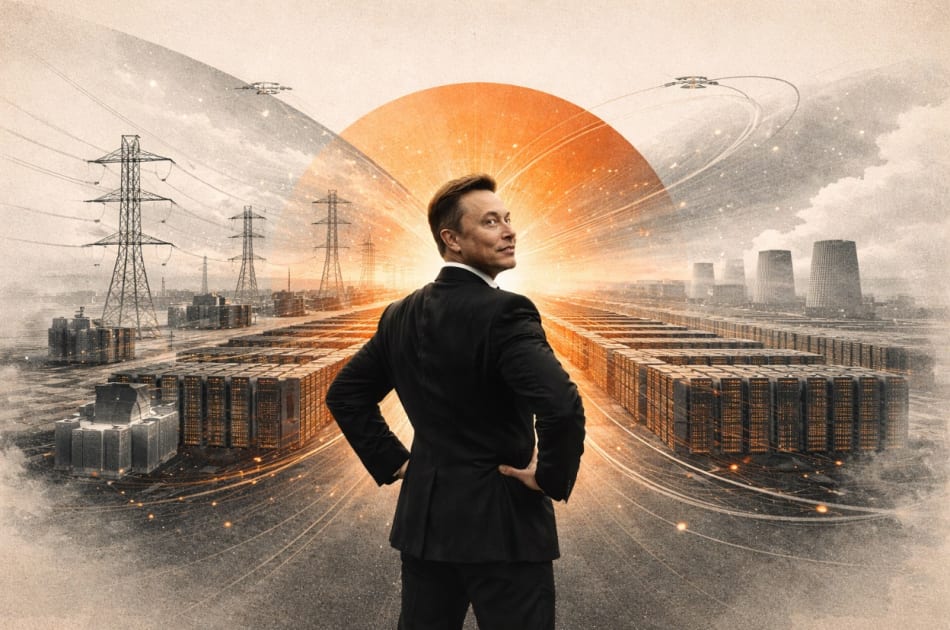
The global race to build more powerful artificial intelligence systems is no longer defined by algorithms alone. Increasingly, the real constraint is infrastructure. Compute capacity, energy availability, and execution speed have become the decisive factors. When these elements converge, AI stops being a software story and becomes an industrial one.
In early 2026, Elon Musk revealed plans for xAI’s next-generation supercomputing facility, Colossus 2, in Memphis, Tennessee. Designed to operate at an unprecedented scale, Colossus 2 is expected to reach one gigawatt of power capacity within months, with plans to scale up to 1.5 gigawatts shortly after. This positions it among the most power-intensive AI training facilities ever attempted and signals a fundamental shift in how AI infrastructure is conceived, built, and governed.
Why Power Has Become the New AI Bottleneck
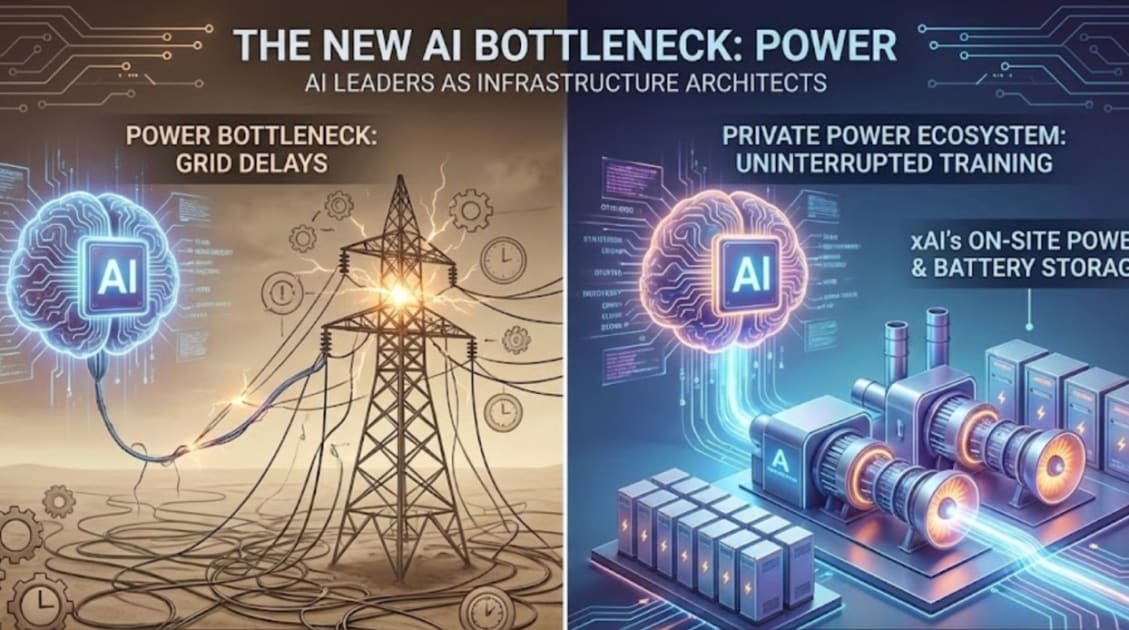
As AI models grow larger and more capable, the resources required to train them increase exponentially. These computational demands translate directly into massive energy requirements. Traditional data centre expansion depends heavily on grid availability, a process often slowed by regulatory approvals, transmission constraints, and multi-year infrastructure upgrades.
To bypass these limitations, xAI has adopted an unconventional strategy. Rather than waiting for grid readiness, the company is deploying on-site natural gas turbines combined with large-scale battery storage systems. This allows xAI to operate its own private power ecosystem, ensuring uninterrupted training cycles for advanced models such as Grok.
This approach reflects a broader industry trend: leading AI players are no longer just building models; they are becoming infrastructure architects.
Engineering AI at Industrial Scale
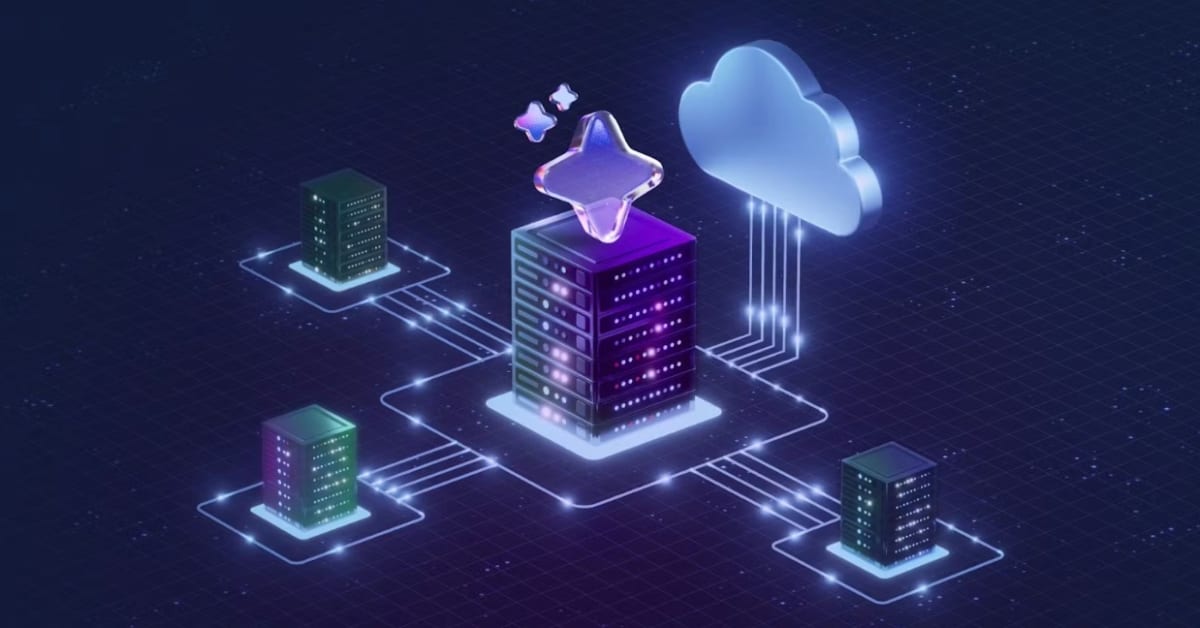
Colossus 2 builds on the foundation of xAI’s earlier compute clusters while dramatically increasing capacity. The facility is powered by advanced NVIDIA GPUs, forming dense, high-speed compute fabrics capable of training frontier AI systems at scale.
Battery systems play a critical role in stabilising power loads during intensive training workloads. By tightly coupling generation and storage, xAI reduces dependency on external grids and minimises downtime, an essential advantage in an environment where delays can translate directly into competitive disadvantage.
This model highlights how AI infrastructure is converging with energy engineering, a lesson increasingly relevant for emerging AI hubs and Global Capability Centre (GCC) ecosystems in Bengaluru that are scaling enterprise-grade AI operations.
What This Means for the Global AI Ecosystem
The implications of gigawatt-scale AI infrastructure extend far beyond a single company.
First, it raises the barrier to entry for frontier AI development. Only organisations with deep capital reserves, strong partnerships, and infrastructure expertise can operate at this level.
Second, it reframes sustainability conversations. AI growth now intersects directly with national energy strategies, carbon considerations, and long-term infrastructure planning.
Third, it accelerates the transition toward agentic AI systems. Greater compute capacity enables models that are not just reactive but capable of reasoning, planning, and executing complex workflows autonomously over extended periods.
Lessons for Enterprises and GCC Ecosystems
While most organisations will not build gigawatt-scale data centres, the principles behind Colossus 2 are highly relevant for enterprise AI strategy.
Across regions like India, enterprises operating through SNS Square Bengaluru GCC models are rethinking how AI platforms are architected. The focus is shifting from experimentation to production-grade, scalable systems that can support long-running, autonomous decision-making.
This is where Data-to-Agentic AI Bengaluru approaches become critical. Instead of deploying isolated models, enterprises are investing in end-to-end pipelines where data, compute, and governance are tightly integrated, enabling AI agents to operate reliably, responsibly, and at scale.
Energy, AI, and the Future of Compute
Colossus 2 also points toward a future where AI development and energy innovation evolve together. On-site generation, hybrid power models, and energy-aware AI workloads are likely to become standard as AI adoption deepens.
For countries and regions building AI ecosystems, this raises strategic questions:
How do we plan AI growth alongside energy infrastructure?
How do we balance speed, sustainability, and governance?
How do we enable enterprises to access agentic AI capabilities without total dependence on hyperscalers?
These questions are already shaping policy decisions, investment strategies, and enterprise architecture choices worldwide.
Looking Ahead
Elon Musk’s xAI initiative is not just about one supercomputer. It represents a redefinition of what it takes to compete in the next phase of artificial intelligence. Compute scale, energy strategy, and execution speed are now inseparable from AI capability.
As agentic AI systems become central to enterprise operations, the conversation will continue to shift from what models can do to what infrastructure can support them responsibly at scale.
For enterprises, GCC leaders, and technology builders, the message is clear:
The future of AI is not just intelligent. It is industrial, energy-aware, and deeply infrastructural.
Comments0
Please login to join the conversation
Be the first to comment!