
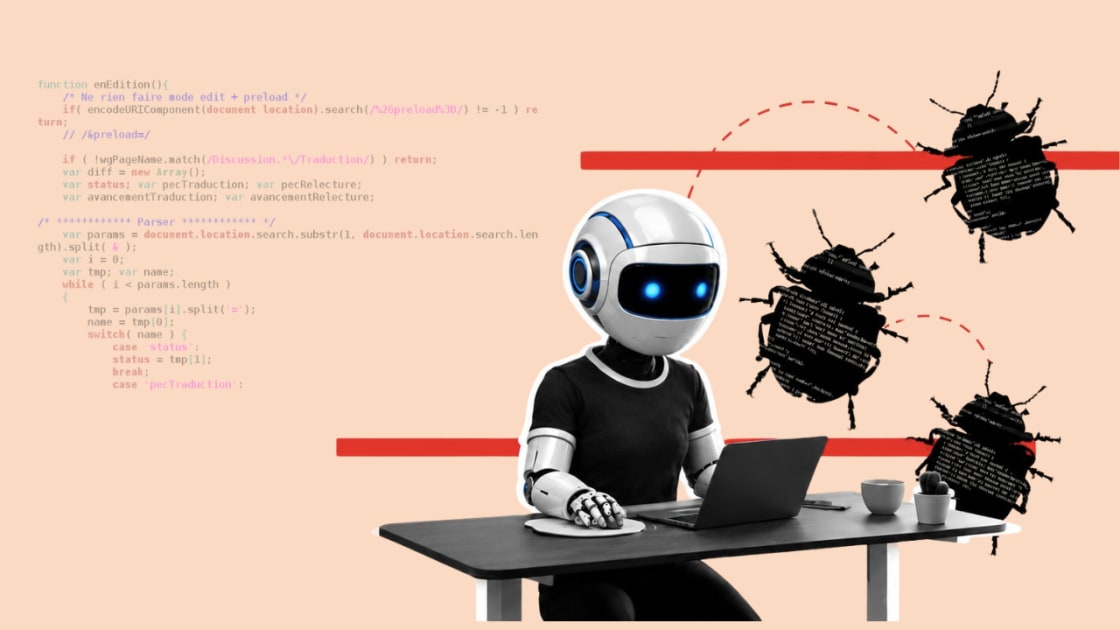
Software development is becoming increasingly complex. Modern applications operate across cloud environments, APIs, microservices, distributed systems, and real-time infrastructure. As organizations scale digitally, engineering teams are expected to deliver faster releases, maintain higher reliability, and continuously innovate without increasing operational overhead.
Traditional development workflows are struggling to keep pace.
Developers spend significant time fixing repetitive bugs, reviewing logs, identifying root causes, maintaining legacy systems, and troubleshooting production failures. These manual processes slow down product delivery and reduce engineering efficiency.
This is where Autonomous Coding and Debugging Agents powered by Agentic AI are transforming modern software engineering.
From Automation to Intelligent Engineering
Earlier development tools focused primarily on automation through predefined scripts and static workflows. Today, AI-powered engineering agents are introducing a more intelligent approach.
Autonomous Coding and Debugging Agents can understand context, analyze system behavior, learn from codebases, and continuously improve software workflows over time.
Instead of simply assisting developers, these agents actively participate in the engineering lifecycle.
They can:
Generate code intelligently
Detect bugs in real time
Analyze failures automatically
Optimize performance continuously
Recommend fixes proactively
Support testing and deployment workflows
This marks a shift from reactive software maintenance to intelligent and adaptive engineering operations.
Autonomous Coding Agents
Autonomous Coding Agents are designed to accelerate software development by reducing repetitive engineering effort.
These AI agents can support:
Code generation and optimization
API and workflow development
Code refactoring
Documentation assistance
Architecture recommendations
Automated testing preparation
By understanding development patterns and system dependencies, these agents help engineering teams accelerate product development while improving consistency across codebases.
For enterprises managing large-scale development environments, this creates faster release cycles and improved engineering productivity.
Autonomous Debugging Agents
Debugging remains one of the most time-consuming aspects of software development.
Traditional debugging workflows often involve manual log reviews, issue replication, cross-team coordination, and delayed root cause analysis. As systems grow more distributed, identifying failures becomes increasingly difficult.
Autonomous Debugging Agents help solve this challenge by continuously monitoring systems and identifying issues in real time.
These agents can:
Detect anomalies and failures automatically
Analyze logs and operational data
Identify root causes faster
Recommend or apply fixes intelligently
Monitor production environments continuously
Reduce downtime and operational disruptions
This allows organizations to move from reactive troubleshooting toward proactive engineering resilience.
The Business Impact
AI-powered engineering agents are creating measurable value across software organizations.
Faster Development Cycles
AI-assisted coding accelerates feature delivery and reduces repetitive manual work.
Reduced Downtime
Continuous debugging and proactive issue detection improve system stability.
Improved Code Quality
Automated validation and optimization increase consistency across engineering environments.
Higher Engineering Productivity
Developers spend less time on operational troubleshooting and more time on innovation.
Scalable Software Operations
Organizations can manage increasing software complexity more efficiently.
Engineering Teams and AI Collaboration
The rise of Autonomous Coding and Debugging Agents is not about replacing developers. It is about enabling engineering teams to operate more effectively in highly complex digital environments.
Human developers continue to lead architecture, creativity, product thinking, and strategic problem-solving. AI agents enhance this process by handling repetitive execution tasks at scale.
This collaboration between engineers and intelligent agents is shaping the future of software development.
The Future of AI-Driven Engineering
As enterprise systems continue to evolve, intelligent engineering agents will become a core part of modern development operations.
Future AI agents will increasingly support:
Real-time infrastructure optimization
Autonomous testing environments
Predictive system maintenance
Continuous security monitoring
Self-healing software systems
Organizations adopting intelligent engineering ecosystems today are positioning themselves for faster innovation, stronger operational resilience, and long-term scalability.
Conclusion
Autonomous Coding and Debugging Agents powered by Agentic AI are redefining how software is built, maintained, and optimized.
By combining intelligent code generation, real-time debugging, and continuous operational learning, these AI agents help organizations accelerate software delivery while improving reliability and engineering efficiency.
The future of software engineering will not be driven by humans or AI alone, but by intelligent collaboration between both.
make a professional structure
Autonomous Coding and Debugging Agents: Redefining the Future of Software Engineering
Introduction
Software engineering is entering a new phase driven by intelligent automation, real-time decision-making, and AI-powered development ecosystems. As enterprise applications grow increasingly complex across cloud platforms, APIs, microservices, and distributed environments, development teams are under pressure to deliver software faster while maintaining performance, security, and reliability.
Traditional development workflows often struggle to keep pace with this scale of complexity. Engineers spend valuable time fixing repetitive bugs, reviewing logs, troubleshooting production issues, and maintaining technical debt instead of focusing on innovation and strategic product development.
Autonomous Coding and Debugging Agents powered by Agentic AI are emerging as a transformative solution to this challenge.
These intelligent AI agents are reshaping how organizations build, maintain, optimize, and scale modern software systems.
The Shift from Traditional Automation to Agentic AI
Conventional automation tools are designed to execute predefined workflows and scripted tasks. While effective for repetitive processes, they lack contextual understanding and adaptive decision-making capabilities.
Agentic AI introduces a more advanced operational model.
Autonomous Coding and Debugging Agents can:
Understand coding patterns and dependencies
Analyze software behavior in real time
Detect issues proactively
Learn continuously from engineering environments
Execute intelligent development and debugging tasks autonomously
This evolution transforms software engineering from reactive problem-solving into an intelligent and adaptive operational framework.
What Are Autonomous Coding Agents?
Autonomous Coding Agents are AI-powered systems capable of generating, optimizing, and maintaining code with minimal manual intervention.
These agents support development teams by accelerating repetitive engineering tasks and improving development efficiency across the software lifecycle.
Core Capabilities
Intelligent Code Generation
AI agents generate production-ready code based on development requirements, architecture patterns, and contextual understanding.
Code Optimization
Agents continuously analyze existing codebases to improve performance, maintainability, and scalability.
Automated Refactoring
Legacy or inefficient code structures can be reorganized and optimized automatically.
Development Assistance
Agents assist developers with documentation, API creation, workflow logic, and testing preparation.
By reducing repetitive engineering effort, coding agents enable faster software delivery and improved development consistency.What Are Autonomous Debugging Agents?
Debugging is one of the most resource-intensive activities in modern software engineering. As systems become increasingly distributed, identifying root causes and resolving issues manually becomes more complex and time-consuming.
Autonomous Debugging Agents help organizations move from reactive troubleshooting to proactive operational intelligence.
Core Capabilities
Real-Time Issue Detection
Agents continuously monitor applications, infrastructure, and system behavior to identify anomalies and failures instantly.
Root Cause Analysis
AI-powered debugging systems analyze logs, dependencies, and operational signals to identify the underlying cause of issues faster.
Intelligent Resolution Recommendations
Agents recommend or autonomously apply fixes based on historical patterns and operational context.
Continuous System Monitoring
Production environments are monitored continuously to improve resilience and minimize downtime.
This creates more stable and responsive engineering operations.
Business Impact of AI-Powered Engineering Agents
The adoption of Autonomous Coding and Debugging Agents creates measurable operational and strategic value for enterprises.
Faster Development Cycles
AI-assisted development accelerates feature delivery and reduces manual engineering overhead.
Reduced Operational Downtime
Continuous monitoring and intelligent debugging improve system reliability and operational stability.
Improved Code Quality
Automated optimization and validation increase consistency across engineering environments.
Higher Engineering Productivity
Developers spend less time troubleshooting operational issues and more time focusing on innovation.
Scalable Engineering Operations
Organizations can manage growing software complexity more efficiently without proportional increases in operational effort.
Human Engineers and AI Collaboration
The rise of Autonomous Coding and Debugging Agents does not eliminate the need for software engineers. Instead, it enhances engineering capabilities by allowing AI agents to handle repetitive execution tasks while humans focus on creativity, architecture, and strategic problem-solving.
Human expertise remains essential in areas such as:
Product thinking
System design
Business logic
Innovation strategy
Governance and oversight
The future of software engineering will be driven by collaboration between intelligent AI agents and human developers.
The Future of Intelligent Software Engineering
AI-powered engineering ecosystems are evolving rapidly. In the coming years, Autonomous Coding and Debugging Agents will increasingly support:
Self-healing software systems
Autonomous testing environments
Predictive infrastructure maintenance
Real-time performance optimization
Continuous security monitoring
Organizations adopting intelligent engineering operations today are positioning themselves for greater agility, resilience, and innovation scalability.
Conclusion
Autonomous Coding and Debugging Agents powered by Agentic AI are redefining the software development lifecycle.
By combining intelligent code generation, real-time debugging, continuous monitoring, and adaptive operational learning, these AI agents enable organizations to accelerate development, improve reliability, and scale engineering operations more effectively.
As software ecosystems continue to grow in complexity, intelligent engineering agents will become a foundational component of modern enterprise technology strategy.
Comments0
Please login to join the conversation
Be the first to comment!