
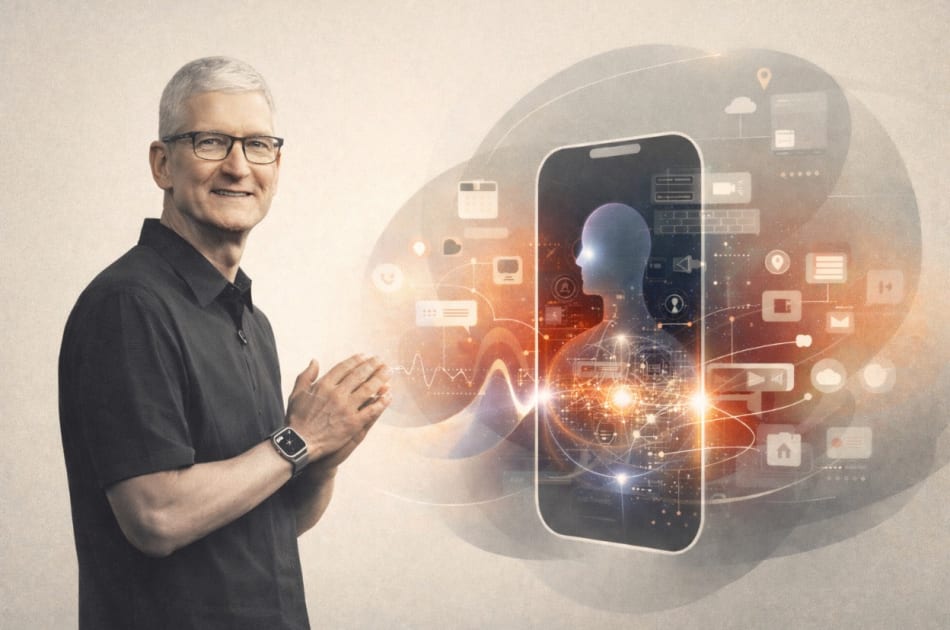
After more than a decade as one of the world’s most recognisable digital assistants, Apple is preparing to fundamentally reimagine Siri. Slated for release in spring 2026, the upcoming overhaul represents Apple’s most ambitious move yet into large language model–driven intelligence, positioning Siri to move beyond scripted responses toward deeper contextual understanding and autonomous task execution.
This is not a cosmetic upgrade. It reflects Apple’s strategic response to a rapidly evolving AI landscape where digital assistants are expected to reason, remember, and act across workflows. As competitors accelerate innovation, the 2026 Siri release marks a decisive reset in Apple’s AI journey.
From Voice Commands to Contextual Intelligence
Since its debut in 2011, Siri helped popularise voice-based interaction. However, as global AI capabilities advanced, its limitations became increasingly apparent, particularly in handling multi-step queries, maintaining conversational context, and interacting intelligently across applications.
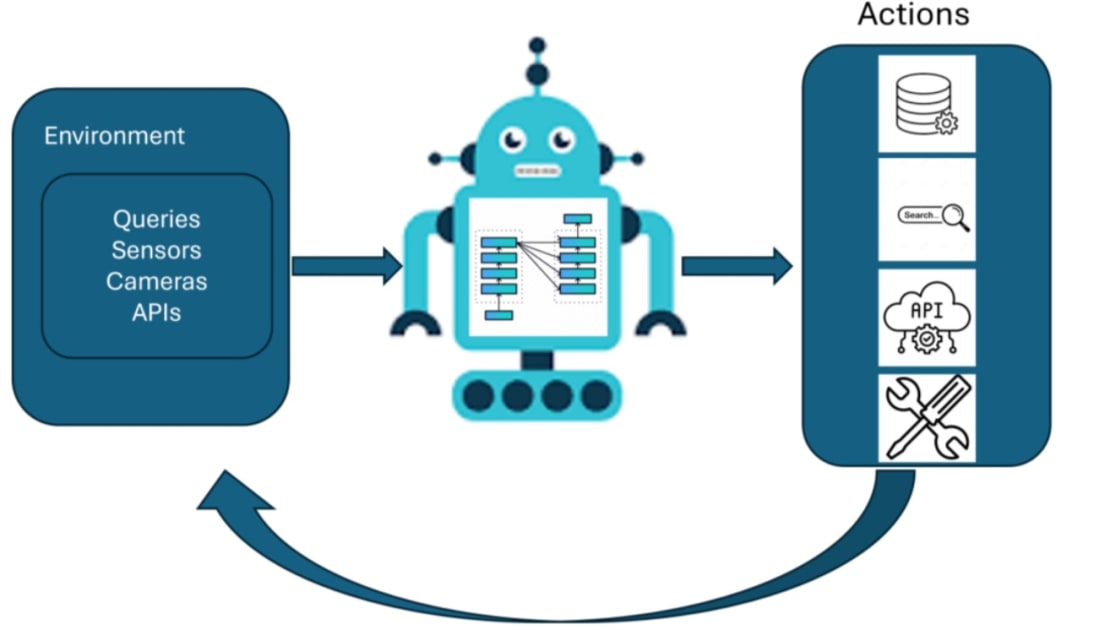
The upcoming overhaul addresses these gaps by embedding large language models directly into Siri’s core architecture. This enables the assistant to interpret intent more accurately, generate more natural responses, and retain context across interactions. Instead of responding to isolated commands, Siri is expected to function as a continuous, task-aware assistant.
For users, this means fewer repeated prompts and more fluid interactions. For Apple, it represents a shift from reactive assistance to intelligent orchestration.
Privacy-First AI, Built On-Device
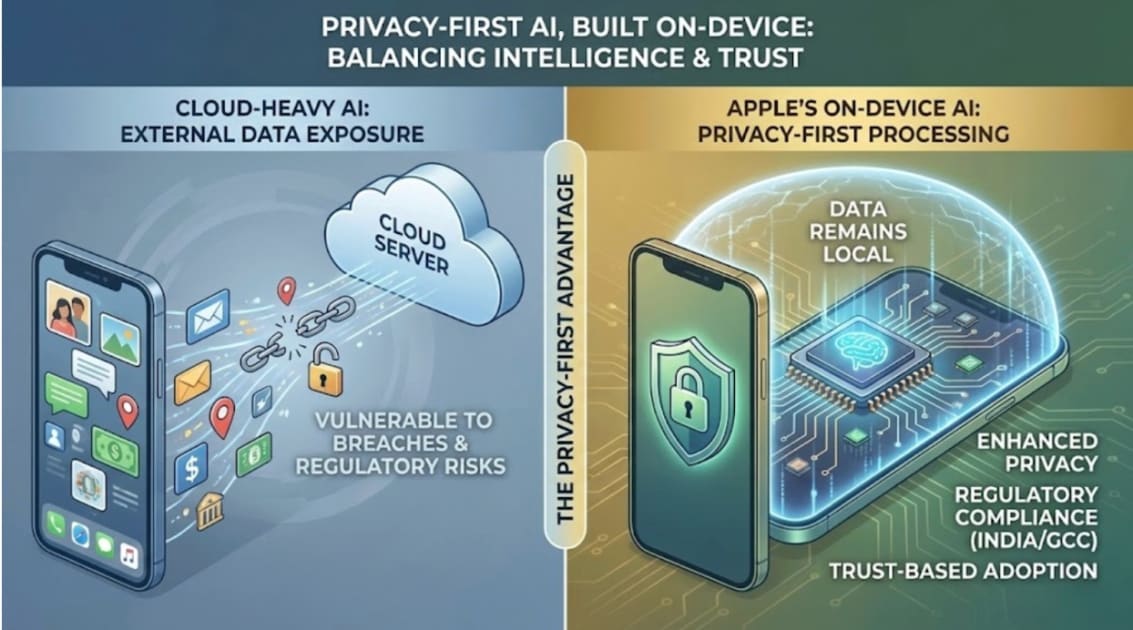
A defining element of Apple’s AI strategy remains privacy. Unlike cloud-heavy approaches adopted by many competitors, Apple is doubling down on on-device processing wherever possible. This design choice allows user data to remain local, reducing exposure while still delivering advanced AI capabilities.
This balance between intelligence and privacy is increasingly relevant in regions such as India, where data governance, regulatory clarity, and user trust are central to digital adoption. Enterprises and platform builders across Global Capability Centre (GCC) ecosystems in Bengaluru are observing similar patterns, where AI adoption must align with compliance expectations and long-term trust.
Deeper Integration Across Apple’s Ecosystem
The revamped Siri is expected to integrate more deeply across Apple’s ecosystem, including iPhone, iPad, Mac, Apple Watch, and future platforms. Enhanced app-level awareness will allow Siri to perform actions within applications rather than simply launching them.
For example, Siri could summarise emails, extract key information from documents, or complete tasks across multiple apps in a single flow. This level of orchestration reflects the broader industry movement toward agentic AI systems, where intelligence spans tools, data, and workflows.
Similar architectural principles are influencing enterprise AI design patterns explored by innovation hubs such as SNS Square Bengaluru GCC, where AI agents are increasingly designed to operate across systems rather than within silos.
Strategic Timing in a Competitive AI Landscape
Apple’s decision to deliver this overhaul in 2026 is both technical and strategic. With generative AI now mainstream, user expectations around digital assistants have shifted rapidly. This release allows Apple to re-enter the conversation with a more mature, scalable, and privacy-aligned approach.
Industry analysts suggest the update could influence device upgrade cycles, as AI capability becomes a key decision factor for consumers. More intelligent assistants may also unlock new service use cases, from health insights and accessibility to productivity automation.
Challenges Apple Still Must Navigate
Despite its promise, the rollout will not be without challenges. Running advanced language models efficiently on-device places significant demands on hardware, potentially limiting some features to newer devices. Apple will also need to ensure consistent performance across languages, accents, and usage contexts.
Equally important is expectation management. Years of delayed AI promises have created scepticism among some users. The success of Siri’s reboot will depend not only on technical sophistication but on how meaningfully it improves everyday interactions.
Why This Matters Beyond Consumer Devices
Siri’s evolution reflects a broader shift in how AI systems are being designed. The focus is moving away from single-function automation toward context-aware, decision-capable assistants that operate continuously in the background.
This same shift is shaping enterprise AI strategies across sectors such as healthcare, finance, IT operations, and supply chains. In India’s expanding digital ecosystem, including AI-driven GCC models, the emphasis is increasingly on trustworthy, scalable, and context-aware AI, rather than standalone tools.
Looking Ahead
If executed well, Siri’s 2026 upgrade could redefine Apple’s role in the AI landscape. More importantly, it may signal how intelligent assistants evolve from helpful interfaces into embedded decision layers within digital ecosystems.
The next phase of AI will not be about who speaks the most but about who understands the best.
Apple’s Siri is preparing to make that leap.
Comments0
Please login to join the conversation
Be the first to comment!