
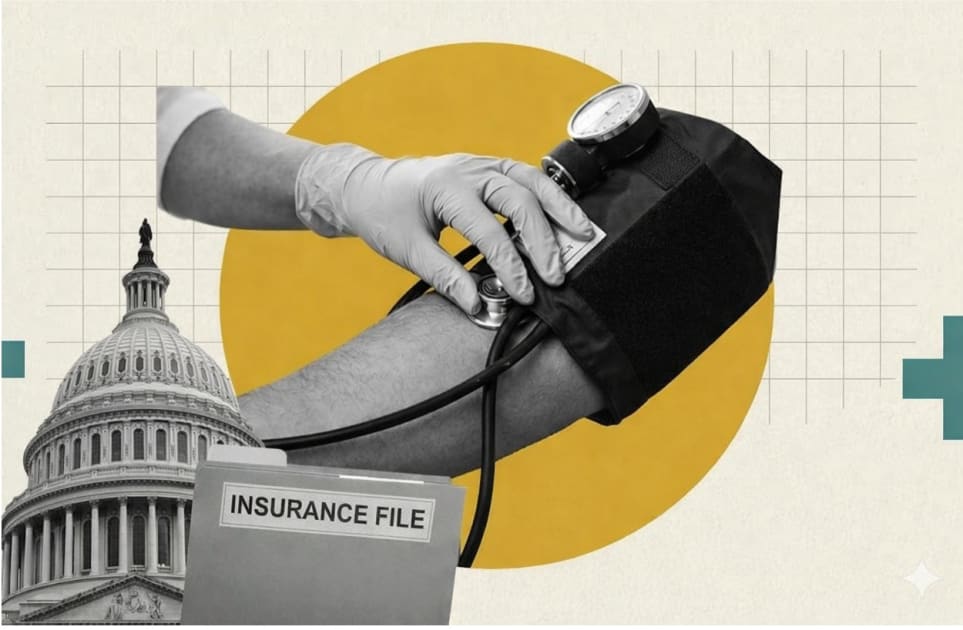
Artificial intelligence is rapidly reshaping the health insurance landscape, but policymakers across the United States are deeply divided over how far its use should go. As insurers increasingly deploy AI systems to automate claims review, risk assessment, and prior authorization decisions, governments are scrambling to balance innovation with accountability. The result is a complex regulatory battle that cuts across traditional political lines.
At the center of the debate is a fundamental question: Should insurance companies be allowed to use advanced algorithms to make decisions that affect patient care, coverage approvals, and treatment timelines?
Rising Adoption of AI in Insurance Decisions
Health insurers argue that AI enables faster processing, improved fraud detection, and more consistent decision-making. Automated systems can analyze vast datasets, identify patterns, and flag anomalies far beyond human capability. In theory, this should reduce administrative delays and operational costs while improving efficiency.
However, critics warn that algorithmic decisions may lack transparency and accountability. Patients and physicians often struggle to understand why a claim was denied or delayed, especially when decisions are driven by complex models rather than human review.
Concerns are amplified by reports that automated tools may reject requests at scale, sometimes without sufficient clinical oversight. This has fueled public skepticism and prompted calls for stricter governance.
States Move to Regulate AI Use
Several U.S. states have begun introducing laws to restrict or monitor how insurers deploy artificial intelligence. Measures include:
Requiring human review for coverage denials
Mandating transparency about algorithmic decision-making
Allowing regulators to audit AI systems
Limiting automated processing in prior authorization
These efforts reflect growing anxiety that unchecked automation could undermine patient rights or delay critical care.
Public sentiment supports oversight. Surveys consistently show that a majority of Americans are concerned about the role of AI in healthcare decisions, regardless of political affiliation.
Federal Push for Innovation Over Regulation
In contrast, federal policymakers emphasizing technological leadership argue that excessive regulation could stifle innovation. Proponents believe the United States must maintain a competitive edge in artificial intelligence development, particularly as other nations invest heavily in advanced systems.
From this perspective, restricting AI use in insurance could slow progress and reduce the potential benefits of digital transformation.
This tension between innovation and consumer protection mirrors broader debates across industries adopting advanced automation.

The Transparency and Accountability Challenge
One of the most difficult issues is explainability. Many AI models operate as “black boxes,” producing results without easily interpretable reasoning. When applied to insurance decisions, this opacity raises serious ethical and legal concerns.
Healthcare professionals worry that automated decisions may prioritize cost containment over patient outcomes. Regulators, meanwhile, must determine what constitutes meaningful human oversight.
Simply requiring a human signature on an AI-generated decision may not guarantee genuine review. Over time, decision fatigue can lead to rubber-stamping automated recommendations.
Implications for Global Enterprise Operations
Although the debate is unfolding in the United States, its implications extend worldwide. Insurance providers, healthcare systems, and multinational enterprises increasingly rely on centralized technology hubs and GCC structures to deliver analytics, automation, and digital services at scale.
As organizations deploy advanced decision systems across borders, they must navigate varying regulatory frameworks while maintaining consistent standards for ethics and accountability.
Emerging technologies such as Agentic AI further complicate the landscape. Unlike traditional automation, agentic systems can act autonomously, coordinate tasks, and adapt to changing conditions. In insurance contexts, this could mean end-to-end workflow management, from data collection to decision execution, raising new questions about governance and control.
The Path Forward: Innovation with Guardrails
Experts increasingly agree that the solution is not to halt AI adoption but to implement robust safeguards. Effective frameworks may include:
Clear accountability structures for automated decisions
Audit trails and explainability requirements
Human-in-the-loop oversight for high-risk outcomes
Bias detection and fairness monitoring
Secure handling of sensitive health data
Organizations must also invest in governance models that evolve alongside technology.
A Strategic Moment for Digital Transformation
For enterprises worldwide, the controversy highlights a broader reality: AI is no longer a purely technical issue. It is a strategic, ethical, and regulatory challenge that touches every aspect of operations.
Technology hubs, innovation centers, and consulting ecosystems, including organizations such as SNS Square, are increasingly focused on helping enterprises deploy AI responsibly while maintaining performance and compliance.
As automation capabilities advance, the insurance industry’s experience may serve as a blueprint for other sectors facing similar dilemmas.
Conclusion
Artificial intelligence promises to transform health insurance by accelerating processes, improving accuracy, and reducing administrative burden. Yet its deployment raises profound questions about fairness, transparency, and human oversight.
The outcome of today’s policy debates will shape not only insurance practices but the broader future of AI governance. Organizations that strike the right balance between innovation and accountability will be best positioned to earn trust, navigate regulation, and deliver sustainable value in an AI-driven world.
Comments0
Please login to join the conversation
Be the first to comment!