
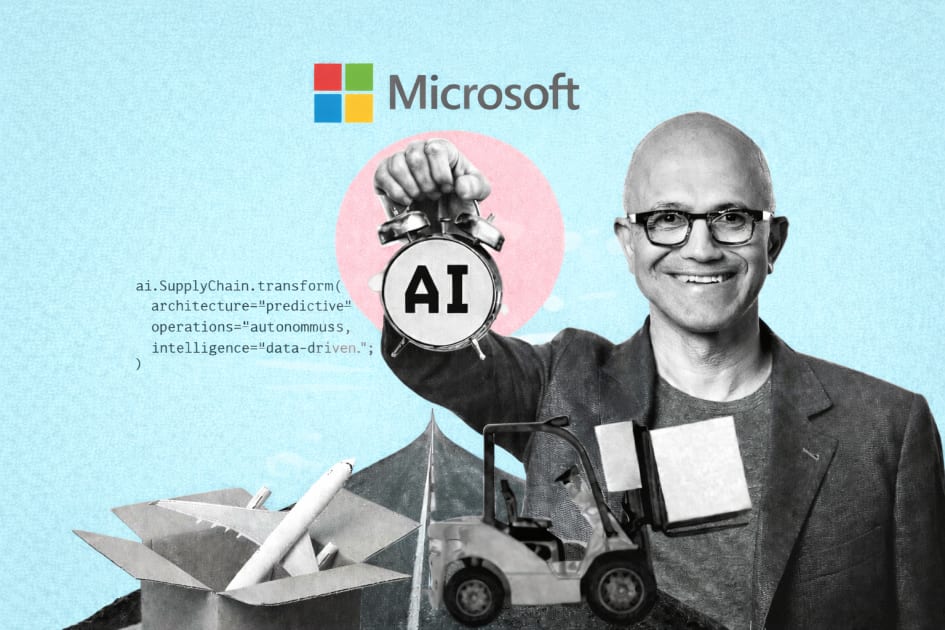
Artificial intelligence is rapidly redefining how modern supply chains operate, and organizations running Microsoft Dynamics ERP systems are at the center of this transformation. What was once considered experimental technology is now becoming foundational to planning, procurement, logistics, and fulfillment. As global disruptions, cost volatility, and complex trade dynamics persist, enterprises are moving beyond incremental improvements toward intelligence-driven supply chain models.
For technology leaders and operations teams, the question is no longer whether AI will reshape supply chains, but how quickly they can adapt. The coming year is likely to mark a decisive shift from traditional ERP workflows to AI-native operating models powered by real-time data, predictive insights, and autonomous decision support.
Autonomous Demand Sensing Replaces Static Forecasting
Conventional forecasting methods rely heavily on historical sales patterns and periodic planning cycles. These approaches struggle to respond to sudden market shifts, seasonal anomalies, or external shocks. AI-driven demand sensing fundamentally changes this paradigm.
Modern systems ingest diverse real-time signals such as point-of-sale data, online behavior trends, weather patterns, macroeconomic indicators, and geopolitical developments. Instead of monthly forecasts, organizations can operate with continuously updated projections that adapt dynamically.
For enterprises, this means planning teams shift from generating forecasts to managing exceptions and strategic decisions. Inventory buffers can be reduced without increasing risk, improving both service levels and working capital efficiency.
Predictive Supplier Risk Management Becomes Strategic
Recent supply disruptions revealed a major weakness in traditional supplier management: most ERP systems respond only after problems emerge. AI now enables proactive monitoring of supplier ecosystems.
Advanced analytics platforms scan financial disclosures, news reports, regulatory filings, logistics data, and environmental signals to detect early warning signs of disruption. Procurement teams receive alerts before issues escalate, allowing them to activate contingency plans or diversify sourcing strategies.
This transition from reactive to predictive procurement fundamentally changes risk management. Instead of firefighting, organizations can design resilient supply networks capable of absorbing shocks.
Intelligent Order Orchestration Across Channels
The growth of omnichannel commerce has introduced unprecedented fulfillment complexity. Orders may originate from e-commerce platforms, marketplaces, retail stores, or enterprise customers, each with different service expectations.
AI-driven orchestration engines evaluate multiple variables in real time, including inventory availability, delivery commitments, transportation costs, customer preferences, and sustainability targets. Rather than simply shipping from the nearest warehouse, the system selects the fulfillment path that optimizes cost, speed, and margin simultaneously.
Enterprises deploying these capabilities are seeing measurable improvements in delivery performance and operational efficiency. More importantly, they gain the flexibility to scale without proportionally increasing operational complexity.
Prescriptive Analytics Moves Beyond Reporting
Traditional ERP dashboards focus on historical analysis: what happened and why. The next evolution is prescriptive intelligence, where systems recommend concrete actions or automatically execute them within predefined governance boundaries.
For example, an AI system may detect that a particular product is trending toward stockout in one region while excess inventory exists elsewhere. Instead of merely flagging the issue, it proposes specific responses such as reallocating stock, accelerating production, adjusting pricing, or modifying promotions, along with projected outcomes for each option.
This transforms ERP platforms from passive systems of record into active decision engines. Supply chain professionals increasingly focus on strategy, governance, and exception handling rather than manual analysis.

Digital Twins Enable Scenario Planning at Scale
One of the most powerful emerging capabilities is the use of digital twins — virtual replicas of physical supply chain networks. These models allow organizations to simulate disruptions, policy changes, demand spikes, or infrastructure failures before they occur in reality.
AI-enhanced simulation tools can evaluate thousands of scenarios automatically, uncovering vulnerabilities and optimization opportunities that traditional planning methods would miss. In an environment where tariffs, regulations, and global conditions can shift rapidly, the ability to test strategies before execution becomes a critical competitive advantage.
Digital twins also support long-term network design, helping enterprises decide where to locate facilities, how to structure distribution networks, and how to balance cost against resilience.
The Strategic Imperative for Enterprise Leaders
Taken together, these trends signal a fundamental transition. AI is not simply enhancing ERP functionality; it is becoming the core layer that governs supply chain operations.
Organizations that fully leverage these capabilities can achieve:
Greater resilience against disruptions
Improved service levels with lower inventory
Faster response to market changes
Data-driven decision making at scale
Reduced operational costs
However, technology alone is not sufficient. Success depends on data quality, cross-functional integration, workforce readiness, and governance frameworks. Supply chain data often resides in silos across procurement, finance, logistics, and sales systems. Unlocking AI’s value requires integrating these domains into a coherent intelligence layer.
Enterprises adopting advanced models such as Agentic AI Solutions Bengaluru are moving toward autonomous decision support systems that coordinate planning, execution, and optimization across the entire value chain. Many organizations are also leveraging Global Capability Centre Bengaluru ecosystems to build specialized teams focused on analytics, automation, and AI-driven operations.
Preparing for the Next Phase of Supply Chain Evolution
As 2026 approaches, AI-enabled supply chain capabilities are shifting from competitive differentiators to baseline expectations. Early adopters have already demonstrated measurable gains, and lagging organizations risk widening performance gaps.
Leaders should focus on three priorities:
Strengthening data foundations to support real-time analytics
Upskilling teams to work alongside intelligent systems
Embedding governance models for responsible AI deployment
The supply chain of the future will be adaptive, predictive, and increasingly autonomous. Organizations that embrace this transformation will not only navigate uncertainty more effectively but also unlock new sources of value and innovation.
In a world defined by volatility and complexity, intelligence — not scale alone — will determine supply chain leadership.
Comments0
Please login to join the conversation
Be the first to comment!