
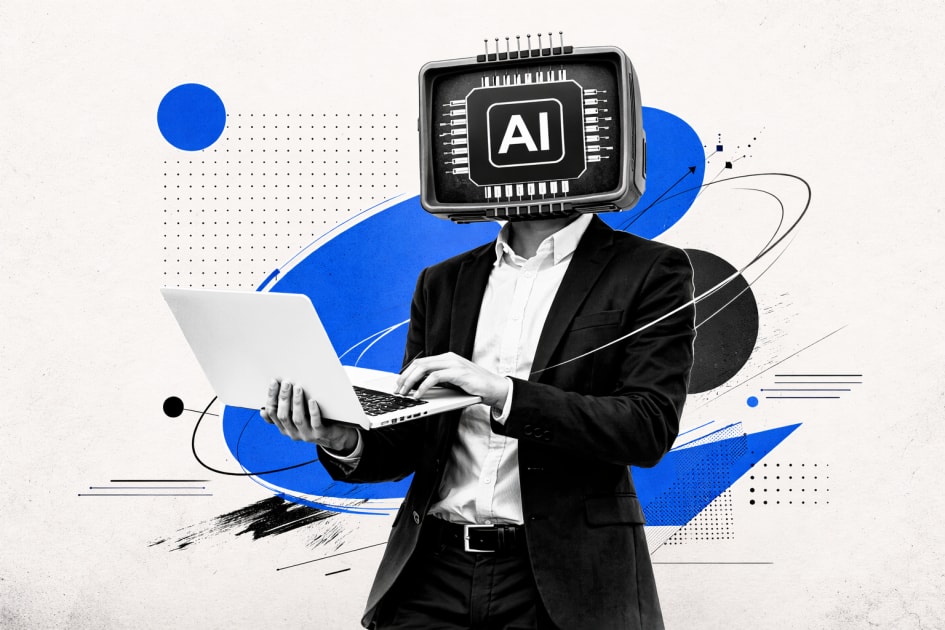
A quiet but profound shift is underway in the global workforce. For decades, humans designed systems, managed operations, and used software as tools to enhance productivity. Today, intelligent platforms are beginning to orchestrate work itself, allocating tasks, coordinating workflows, and engaging human expertise only when judgment, creativity, or accountability is required.
This emerging model signals a reversal of traditional employment logic. Instead of people managing machines, machines are increasingly coordinating people.
Across industries, this transformation is redefining what work looks like, how organizations operate, and where human value truly lies.
From Job Roles to Task-Based Work
Traditional organizations are built around fixed roles, reporting hierarchies, and clearly defined responsibilities. Intelligent platforms disrupt this structure by decomposing work into discrete tasks that can be assigned dynamically.
Modern AI-driven systems can:
Identify operational needs in real time
Break complex projects into smaller tasks
Assign tasks to the most capable resource, human or machine
Monitor progress continuously
Reallocate work based on changing conditions
The result is a shift from static jobs to fluid task ecosystems, where expertise is applied exactly when needed rather than tied to a permanent position.
Why AI-Orchestrated Work Is Emerging Now
Several converging forces are accelerating this change:
Rising operational complexity
Global supply chains, digital ecosystems, and regulatory environments require continuous adaptation that traditional management structures struggle to handle.
Talent shortages
Many industries face persistent gaps in specialized skills. Intelligent systems allow organizations to deploy scarce expertise more efficiently.
Demand for speed and resilience
Markets now change faster than annual planning cycles can accommodate. Real-time coordination becomes essential.
Advances in artificial intelligence
AI is moving beyond analytics and automation into decision support, planning, and workflow orchestration.
These drivers are pushing enterprises toward AI-native operating models in which humans and machines collaborate continuously rather than sequentially.

What Humans Still Do Better
Despite rapid advances, AI cannot replicate several uniquely human capabilities. In fact, the more intelligent systems become, the more valuable these traits grow.
Human contributions increasingly center on:
Strategic judgment under uncertainty
Ethical decision-making
Creative problem solving
Innovation and design
Relationship management
Contextual understanding
Leadership and trust-building
Rather than eliminating jobs, AI is elevating the importance of high-level cognitive and interpersonal skills.
The Rise of Human-in-the-Loop Organizations
Leading enterprises are not removing humans from decision-making. Instead, they are designing systems where machines handle routine execution while people oversee critical outcomes.
This “human-in-the-loop” model ensures:
Accountability for complex decisions
Oversight of automated processes
Rapid intervention when anomalies occur
Continuous improvement of systems
Organizations that balance autonomy with control are achieving both efficiency and reliability.
Global Capability Centers as Transformation Hubs
In India, advanced delivery hubs are increasingly playing a central role in implementing these new operating models. Modern Global Capability Centers are evolving from cost-focused support units into strategic engines for innovation, analytics, and digital transformation.
Technology ecosystems in cities like Bengaluru are enabling enterprises to experiment with AI-driven workflows at scale, supported by deep talent pools and mature infrastructure.
These centers now contribute directly to:
Enterprise decision-making
Product development
Data science initiatives
Platform engineering
Digital operations
This shift reflects a broader move from labor arbitrage to capability-driven value creation.
Implications for Careers and Skills
As work becomes more dynamic, career paths will also change. Long-term roles tied to a single function are giving way to portfolio-style careers defined by projects, skills, and outcomes.
Future-ready professionals will need:
Continuous learning habits
Digital and AI literacy
Systems thinking
Adaptability
Collaboration across disciplines
Emotional intelligence
Technical skills alone will no longer guarantee relevance; the ability to integrate human insight with machine-generated intelligence will be critical.
Governance and Ethical Challenges
AI-directed work allocation introduces new risks that organizations must address:
Transparency in decision-making
Fair evaluation of performance
Data privacy and security
Bias mitigation
Worker well-being
Accountability for automated outcomes
Without strong governance, the efficiency gains of intelligent systems could come at the cost of trust and sustainability.
A New Model of the Enterprise
The organizations emerging from this transformation are fundamentally different from traditional corporations. They are less hierarchical, more adaptive, and deeply data-driven.
Key characteristics include:
Real-time decision-making
Fluid organizational boundaries
Continuous optimization of resources
Integration of human and machine intelligence
Platform-based operating models
Success will depend not just on technology adoption, but on rethinking culture, leadership, and workforce strategy.
The Future Is Collaboration, Not Replacement
The narrative that AI will replace humans oversimplifies reality. What is actually unfolding is a redefinition of roles.
Machines excel at scale, speed, and consistency. Humans excel at judgment, empathy, creativity, and trust. The most successful organizations will combine these strengths rather than choosing between them.
In this new paradigm, AI does not eliminate the need for people, it clarifies where human contribution matters most.
Final Thought
“AI hiring humans” is less a literal phenomenon and more a metaphor for a deeper shift: work is becoming orchestrated by intelligence rather than constrained by organizational charts.
Enterprises that redesign themselves around this reality will gain agility, resilience, and competitive advantage. Those that cling to legacy structures may find themselves unable to keep pace.
The future of work will not be defined by humans versus machines, but by how effectively they collaborate.
Comments0
Please login to join the conversation
Be the first to comment!